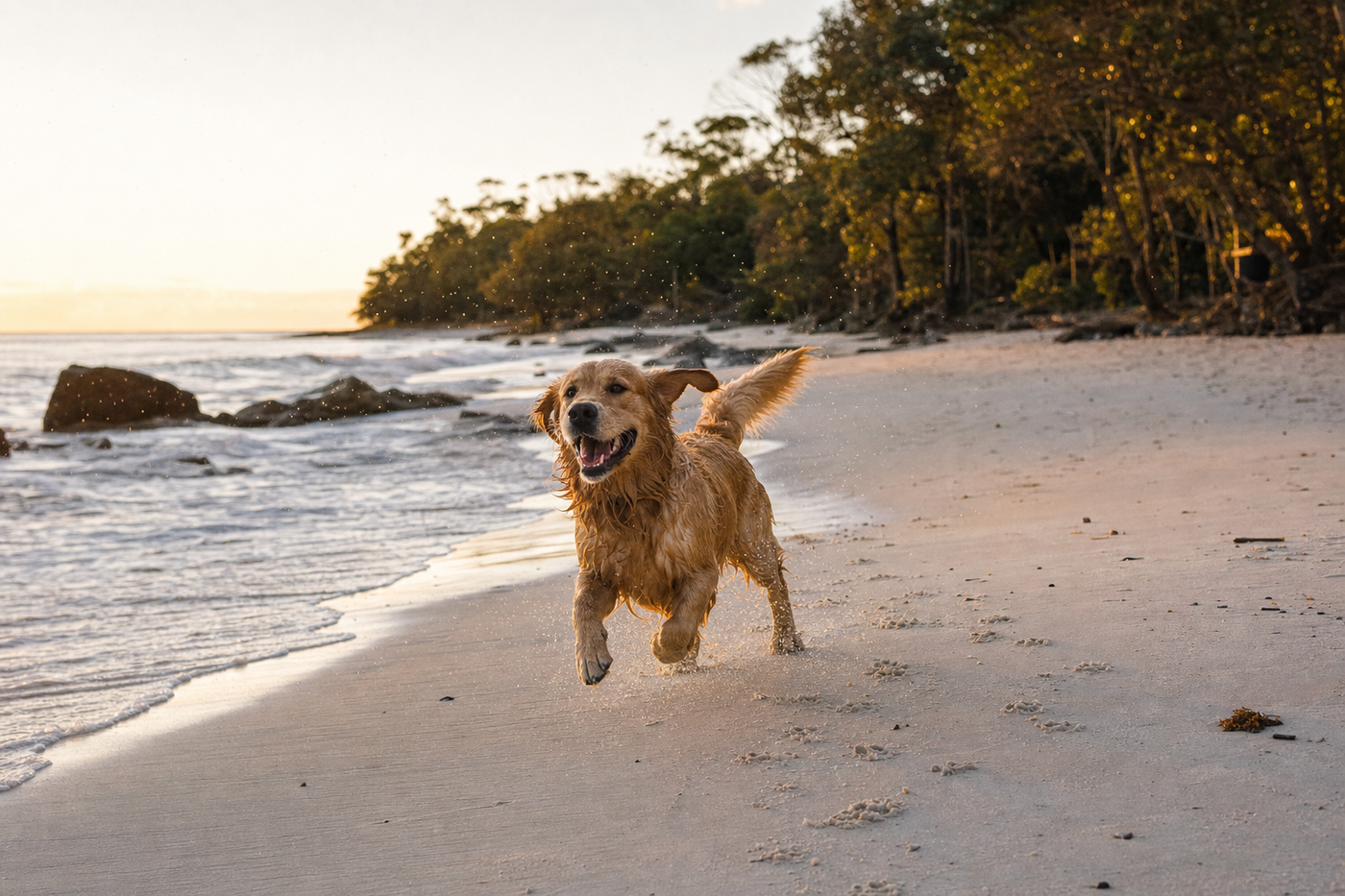
Golden retrievers overheat quickly due to their thick coats. Heat stress can cause seizures and death. Monitor for excessive panting, drooling, and lethargy in temperatures above 25 degrees Celsius.
Snakes, dingoes, and ticks pose serious health risks in remote and outback regions. Never leave your dog unattended outside accommodation in these areas, and check your dog thoroughly each evening.
Why Golden Retrievers Make Great Travel Companions
Golden retrievers are built for adventure. Their calm temperament means they handle long car rides better than many breeds, and they're genuinely happy just being near you whether you're camping in Kakadu or exploring the Great Ocean Road. I learned this the hard way during a 2,000 kilometre trip from Melbourne to Adelaide with my golden, Max. He settled into the back seat and rarely complained about the hours spent driving.
Their size works in your favour too. Golden retrievers are large enough to handle rough terrain and cool water swims, but they're not so big that they're impossible to manage in smaller accommodation. They love people and new environments, which makes staying in pet-friendly cabins or farmstays far easier than with anxious breeds.
However, golden retrievers shed like nothing you've ever seen. Pack lint rollers and accept that your car will look like a golden retriever shed on wheels by day three. Their coats also need maintenance, and humidity in tropical Australia can cause skin issues if you're not careful with regular washing.
Finding Pet-Friendly Accommodation Across Australia
Pet-friendly stays exist across Australia, but they're not always obvious. I've stayed in caravan parks from Cairns to Tasmania, and I've learned that the best places are often small family-run cabins rather than big hotel chains. Airbnb properties with the pet-friendly filter work well, though always message the owner about your golden retriever's size before booking.
Budget-wise, expect to pay an extra 20 to 40 dollars per night for pet-friendly rooms. Caravan parks with on-site cabins often charge flat rates for pets regardless of size, making them cheaper for a large dog. The NRMA and Caravan Parks Association websites list hundreds of dog-friendly parks across every state.
When you arrive at any accommodation, scope out the fenced areas immediately. Check for gaps in fences, thorny plants, or neighbours' territory before letting your golden off lead. Many regional areas have unfenced properties where your dog could wander onto someone else's land. I always ask the owners about local hazards like snakes or aggressive dogs in the area before settling in for the night.
What we recommend
Some links below are affiliate links. Pawtrips may earn a commission at no extra cost to you.
Pet-friendly stays
Finding trustworthy pet-friendly accommodation is the foundation of successful dog travel in Australia. Browse verified pet-friendly properties across every state and region, with filters for golden retrievers and large dogs.
Managing Health and Vaccinations While Travelling
Your golden retriever needs current vaccinations, heartworm prevention, and flea and tick protection before you travel anywhere in Australia. Different regions have different parasite risks. The tropical north requires year-round heartworm prevention, while southern states have seasonal requirements. Get your vet to write down the exact dates and medications you're using, because regional vets will ask.
Heat stress is the biggest health risk I've encountered travelling with a golden retriever. These dogs have thick double coats and struggle in temperatures above 25 degrees Celsius. Never leave your dog in the car, even with windows cracked. On hot days in summer, travel early morning or late evening, and plan extra water stops.
Find a vet clinic before you travel to each region and keep their number saved in your phone. Most vets will see travelling dogs without a booking if there's an emergency. Carry copies of vaccination records, microchip details, and any medication your dog takes. I learned this lesson when Max ate something odd near Uluru and needed antibiotics from a clinic 80 kilometres away.
Seresto Flea & Tick Collar for Large Dogs Over 8kgs
Golden retrievers need reliable flea and tick protection year round, especially when travelling through different regions with varying parasite risks. The Seresto collar provides continuous protection for eight months, so you won't need to reapply treatments during your trip.
Essential Packing List for Road Trips
Pack twice as much water as you think you'll need. A golden retriever needs at least two to three litres per day, more in hot weather. I always carry a collapsible water bowl and fill up at every town, because remote areas between destinations can surprise you with distance.
Bring food for the entire trip plus three extra days. Changing your dog's diet mid-journey causes digestive upset, and you might not find their specific brand in regional towns. A kibble carrier makes this easier to manage and keeps food fresh. Pack dog waste bags, a first aid kit, and any medications your dog needs.
Include grooming tools because golden retrievers mat quickly when they're getting wet from swimming or drinking from water bowls in cars. A simple brush and nail clippers prevent problems. Bring toys and a comfortable travel bed so your dog has familiar items in each new accommodation. A harness or car restraint is non negotiable for safety, and a long lead lets them exercise safely without running into traffic in unfamiliar towns.
Kurgo Dog Food Travel Bag: Kibble Carrier, 5 Pound
Keeping your golden retriever's food fresh and organised in the car is crucial during road trips. This carrier holds kibble safely, prevents spills, and keeps food at proper moisture levels during long journeys across Australia.
Navigating Different Australian Climates and Terrain
Australia's climate varies wildly, and your golden retriever experiences it directly. The tropical north is humid and hot, the outback is scorching and dry, and Tasmania in winter is cold and wet. Golden retrievers handle cold better than heat, but they can still suffer hypothermia if wet and exposed in rough weather.
In hot regions, never exercise your dog during peak heat hours between 11 am and 4 pm. Your golden's paws can burn on hot sand and bitumen, so check the ground temperature with your hand first. Provide shade and cool water at your campsite or accommodation at all times. I've seen too many golden retrievers with heat stress after a day trip to the beach in January.
Terrain varies from sandy beaches in Western Australia to rocky outback near Alice Springs. Golden retrievers love water but watch for saltwater irritation on their coats and between their paw pads. After beach visits, rinse your dog with fresh water. In rocky areas, their soft paws cut easily, so shorter walks and careful ground selection matter. Wet tropical forests can harbour parasites and skin infections, so dry your dog thoroughly after rain and check between their toes daily.
PitPat Dog GPS Tracker - No Subscription Needed
Travelling in remote Australia means your golden retriever could get lost far from home. This GPS tracker provides real time location without ongoing subscription fees, giving you peace of mind in outback regions and remote campgrounds.
Daily Routines That Keep Your Golden Retriever Happy
Your golden retriever thrives on routine even while travelling. Try to maintain feeding times, exercise times, and bedtimes similar to home. Max became anxious when I skipped his morning walk in favour of driving early, so now I plan around his needs first and adjust travel times accordingly.
Aim for 30 to 40 minutes of exercise daily, split into two or three shorter walks. This prevents boredom and gives them chance to toilet properly. Unfit dogs struggle with travel, so maintain their fitness level. A tired golden retriever is a well behaved golden retriever in the car and in accommodation.
Interact with your dog regularly during long driving days. Every two hours, stop for a water break, toilet break, and walk. This keeps them mentally stimulated and prevents the stress and anxiety that builds from eight hour driving stints. Many rest areas and parks along major routes like the Hume Highway have dedicated dog areas. Use them. Your dog's mental health matters as much as physical exercise.
oneisall 4 in 1 Dog Grooming Kit
Golden retrievers shed constantly and mat easily when wet. This grooming kit lets you maintain their coat during travels, preventing matting and skin issues in humid tropical regions or after water activities.
Safety Tips for Remote and Outback Travel
Golden retrievers in remote Australia face hazards that don't exist in cities. Snakes are real, especially in warmer months. Keep your dog on lead in tall grass and scrubland. Ticks are common in bushland, particularly near water, so check your dog thoroughly each evening and remove any ticks with tweezers.
Dingoes and wild dogs exist in outback regions. In central Australia and northern areas, never leave your dog unattended outside your accommodation. Keep them in your vehicle or inside your cabin at night. I've heard stories of dogs taken from campsites near Alice Springs and Uluru, so respect these risks seriously.
Always carry ID tags and have your golden microchipped before travelling. The PitPat GPS tracker gives you real time location if your dog escapes, which is invaluable in remote areas where finding a lost dog is nearly impossible. Keep your vet's phone number and the location of the nearest emergency vet clinic saved in your phone for each region. In outback areas, this might be 100 kilometres away, but it's worth knowing.
Building Confidence in Your Golden Retriever
Some golden retrievers stress during travel, especially on their first trip. Start with short drives to build their confidence. A day trip to a nearby beach or park helps them realise that the car isn't scary and that new places are fun. Max was nervous the first time, but after three short trips, he associated the car with adventure rather than anxiety.
Invest time in making the car comfortable. Bring familiar toys, use a harness rather than just a lead, and keep the temperature cool. Never punish your dog for being anxious. Some dogs benefit from calming treats or supplements before long drives. Your vet can recommend options if your golden shows genuine stress.
Once you're travelling, stay calm yourself. Dogs pick up on your tension. If you're stressed about the drive or worried about accommodation, your golden will sense it and become anxious too. I found that treating travel as part of the adventure rather than a chore made everything easier for both of us.
Plus early access to new guides and partner deals.
No spam. Ever. Just the good stuff for you and your pet.