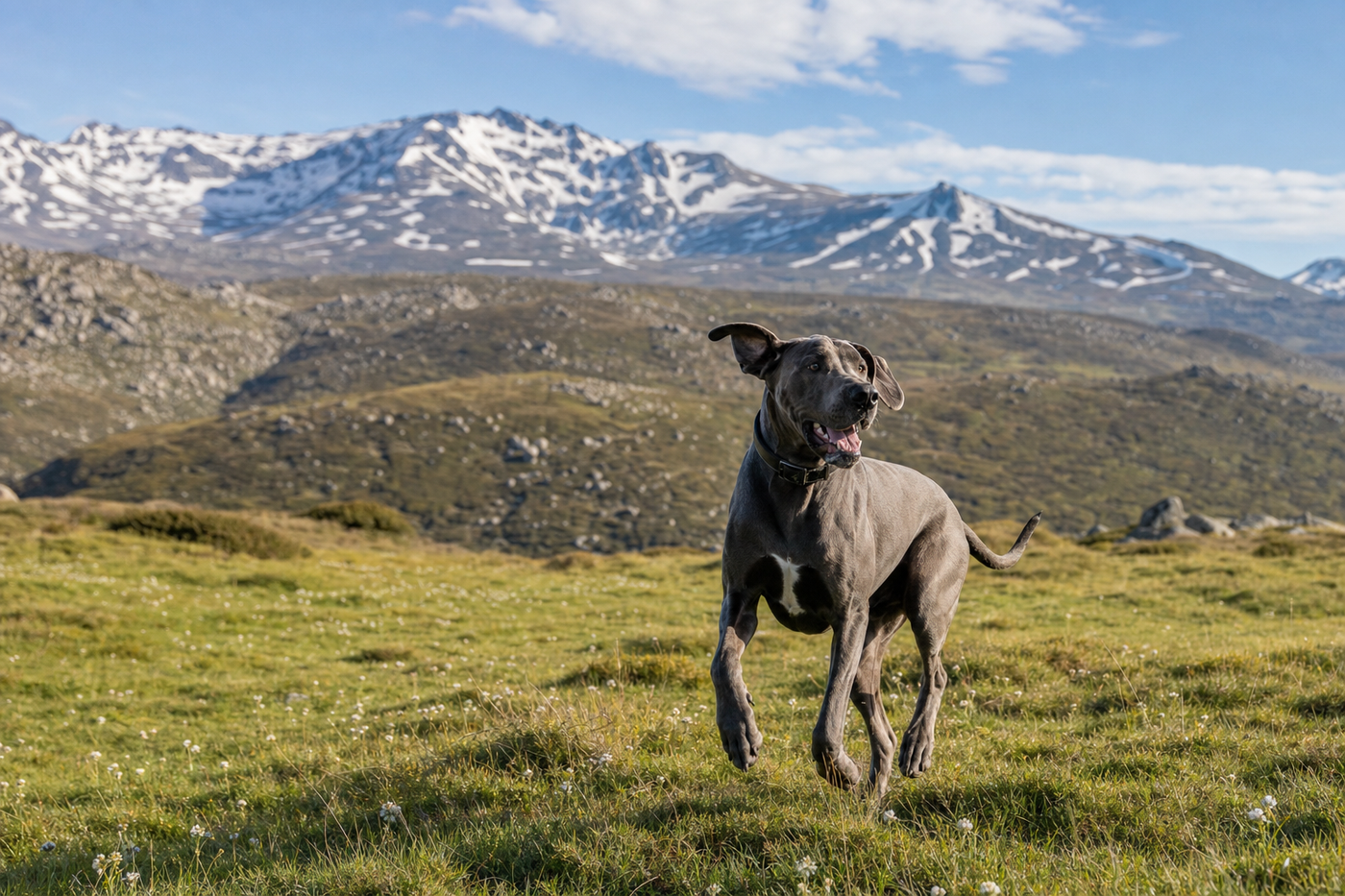
Great Danes are susceptible to heat stroke, which can be fatal within 30 minutes. Never leave your dog in hot environments and watch constantly for excessive panting, drooling, or weakness during travel.
Bloat is a life-threatening emergency in large breeds like Great Danes. Know the signs (restlessness, unproductive vomiting, abdominal distension) and locate emergency vets before travelling.
Why Great Danes need special travel considerations
Great Danes are one of Australia's most lovable giant breeds, but their size creates real challenges when you hit the road. A fully grown male can weigh 80 kilograms and stand 76 centimetres tall at the shoulder, which means they need extra space in cars, larger accommodation, and careful management in heat. I learned this the hard way when I tried to fit my Great Dane into a standard car crate for a trip from Brisbane to the Gold Coast.
Their size also affects how they handle Australian travel conditions. Great Danes overheat faster than smaller dogs because they have less surface area relative to their body mass, making hot weather genuinely risky during summer months. Their joints also wear faster on long drives, so planning frequent breaks is not optional. Understanding these breed-specific needs before you travel means fewer emergency vet visits and a happier dog.
Choosing pet-friendly accommodation for your Great Dane
Finding a place that welcomes a dog the size of a Great Dane is harder than it sounds. Most standard pet-friendly motels have weight restrictions around 15 kilograms, which rules out your gentle giant immediately. You need to ring ahead and speak to actual people rather than relying on online filters, because many owners don't list their policies clearly. When I drove my Great Dane down to Coffs Harbour, I called ten places before finding three that would take him.
Look for holiday homes and larger farm stays rather than traditional motels. Places like Airbnb properties with entire homes work well because your dog gets his own space and the host can see exactly what they're dealing with. Country hotels in towns like Tamworth and Armidale often have more flexible policies than chain establishments. Always ask about outdoor space, especially a fenced area where your Dane can stretch his legs safely. Budget for higher nightly rates, as most places charge extra for giant breeds, usually between 25 and 45 dollars per night on top of the standard rate.
Managing car travel with a 80-kilogram dog
Driving long distances with a Great Dane requires proper equipment and planning. Your dog needs a secure spot where he can't slide around during braking or turns, and where he won't distract you while you're navigating the Hume Highway. A proper crate sized for extra-large dogs works best, or you can use a travel harness that attaches to the seat belt. I invested in a heavy-duty crate measuring 107 centimetres long and never regretted it, even though it took up most of my vehicle's boot space.
Break your journey into manageable chunks. Driving more than four hours without a stop is too much for both you and your dog. Plan routes that include rest areas with grassy space, like those found along the Pacific Highway between Sydney and Brisbane. In summer, never leave your Great Dane in a parked car, even with windows down. The temperature inside can reach dangerous levels within minutes. Bring a portable water bowl and fresh water, and stop every two hours so your dog can stretch and toilet. Pack a cooling mat or damp towel for the car to help him regulate his temperature.
What we recommend
Some links below are affiliate links. Pawtrips may earn a commission at no extra cost to you.
PitPat Dog GPS Tracker - No Subscription Needed
A GPS tracker keeps tabs on your Great Dane's location if he ever escapes during travel. No monthly subscription means you're not paying ongoing fees, and the real-time tracking works anywhere across Australia. This is essential peace of mind when you're far from home with a valuable dog.
Heat management for your Great Dane in Australian summers
Australian summer is brutal for large dogs, and Great Danes suffer more than most. Their dark coats and large body mass make them vulnerable to heat stroke, which can become life-threatening within 30 minutes. If you must travel during December through February, travel only early in the morning, between 5 and 9 am, or late in the evening after 6 pm. Your dog will be safer waiting in air conditioning than sitting in traffic on the Princes Highway on a 35-degree day.
Invest in cooling products for your car and accommodation. Cooling mats designed for large dogs cost around 40 to 60 dollars and can make a massive difference during long drives. At your destination, find places with shade and air conditioning access. Some pet-friendly holiday parks have covered areas where your dog can rest during the heat of the day. Watch for signs of heat stress: excessive panting, drooling, weakness, or vomiting. If you see these signs, move your dog to a cool area immediately and contact a vet. Spring and autumn are the best seasons to travel with your Great Dane across Australia.
Seresto Flea & Tick Collar for Large Dogs Over 8kgs
Travelling through regional Australia exposes your Great Dane to ticks and fleas he wouldn't encounter at home. This collar lasts eight months and provides continuous protection without monthly applications, so you don't need to remember doses while on the road.
Food, water, and health on the road
Your Great Dane eats a lot, and travel disrupts his normal routine, which can cause digestive issues. Pack at least a week's worth of his regular food in airtight containers, because changing brands or finding his exact food in a regional town can be impossible. I learned this when I ran out of my dog's special formula in Wagga Wagga and spent three hours driving to a city vet who stocked it. Bring his normal water bowl or a collapsible one, and offer water every time you stop. Some dogs get anxious diarrhoea when travelling, so having familiar food helps prevent that.
Carry your dog's medical records, vaccination certificate, and flea and tick treatments. Book a check-up with your regular vet before you leave so you can address any health concerns. Ask your vet for the contact details of emergency clinics along your route, because giant breeds sometimes develop bloat or other serious conditions away from home. Pack any regular medications and a basic first aid kit including tweezers for ticks and antiseptic cream. Most regional towns have veterinary clinics, but calling ahead ensures they can fit you in quickly if something goes wrong.
Kurgo Dog Food Travel Bag: Kibble Carrier, 5 Pound
Storing your Great Dane's food in this carrier keeps kibble fresh and dry while travelling. The airtight container prevents spoilage during hot weather when you're driving through inland Australia, and it's compact enough to fit in most car boots alongside other gear.
Best Australian destinations for travelling with your Great Dane
Some parts of Australia are genuinely better for giant dogs than others. The Blue Mountains west of Sydney have cooler temperatures and dog-friendly walks, though some trails have steep sections that are tough on large joints. The Adelaide Hills offer gentler walking paths and numerous pet-friendly wineries with outdoor seating. Byron Bay has a relaxed attitude toward dogs and several quiet beaches where your Great Dane can swim and cool off, though always check local dog beach rules before heading down.
Regional areas often work better than busy cities for a relaxing trip with a large dog. Kangaroo Island offers peaceful accommodation options and quiet spaces where your Dane won't overwhelm other guests. The Grampians in Victoria has cooler weather and shorter walking trails that suit a large dog better than the multi-hour hikes required elsewhere. Tasmania is excellent in summer because the climate is cooler, and many accommodation options are genuinely dog-focused. Avoid peak summer periods and school holidays, when accommodation fills up and beaches become crowded. Spring, autumn, and early winter are ideal seasons for exploring Australia with your Great Dane.
Pet-friendly stays
Pawtrips connects you with accommodation that genuinely welcomes large dogs like Great Danes. Browse options with photos and real information about space, outdoor areas, and house rules rather than guessing which places will accept your giant breed.
Exercise and activities suited to your Great Dane's limitations
Great Danes are surprisingly lazy dogs, which actually works in your favour when travelling. They don't need marathon exercise sessions, just regular short walks and access to space where they can move around. Plan walks of 20 to 30 minutes rather than hour-long hikes, especially on hot days or if your dog has any joint issues. Many Great Danes prefer a swim to a walk, and they usually love water, so look for dog-friendly beaches or quiet swimming holes where your dog can cool off safely.
Be realistic about what your dog can do. A Great Dane cannot climb steep hills or maintain a steady running pace for extended periods. His joints wear faster than smaller breeds, so jumping in and out of cars repeatedly or navigating rough terrain can cause pain. Find activities that suit his actual abilities rather than trying to keep up with the active-dog holiday culture. Sitting with your dog under a tree while you read a book or having a casual walk along a foreshore is perfectly valid travel activity. Your Great Dane will be happier relaxing in a cool, safe space than pushing through activities that strain his body.
Safety, identification, and emergency planning
A Great Dane is valuable, distinctive, and potentially at risk if he escapes in unfamiliar territory. Microchip your dog before you travel and update your contact details with the microchip registry. Carry a collar with an ID tag showing your phone number and a local contact number for wherever you're staying. In regional areas, lost dogs are harder to find because there are fewer rescue services, so prevention is your best strategy. I microchipped my dog before a trip to Bathurst and it gave me peace of mind knowing he could be identified if he ever got loose.
Always keep your dog on a lead in public spaces, even if he's friendly and well-trained. Other dogs might not be friendly, and unfamiliar environments can spook even calm dogs. Know where the nearest emergency vet clinic is located before you need it. Many regional towns have after-hours vet services, but some don't, so research this beforehand. Carry a recent clear photo of your dog on your phone so you can share it quickly if he goes missing. Keep emergency contact numbers for your regular vet, your dog's microchip registry, and local animal services stored in your phone.
Plus early access to new guides and partner deals.
No spam. Ever. Just the good stuff for you and your pet.