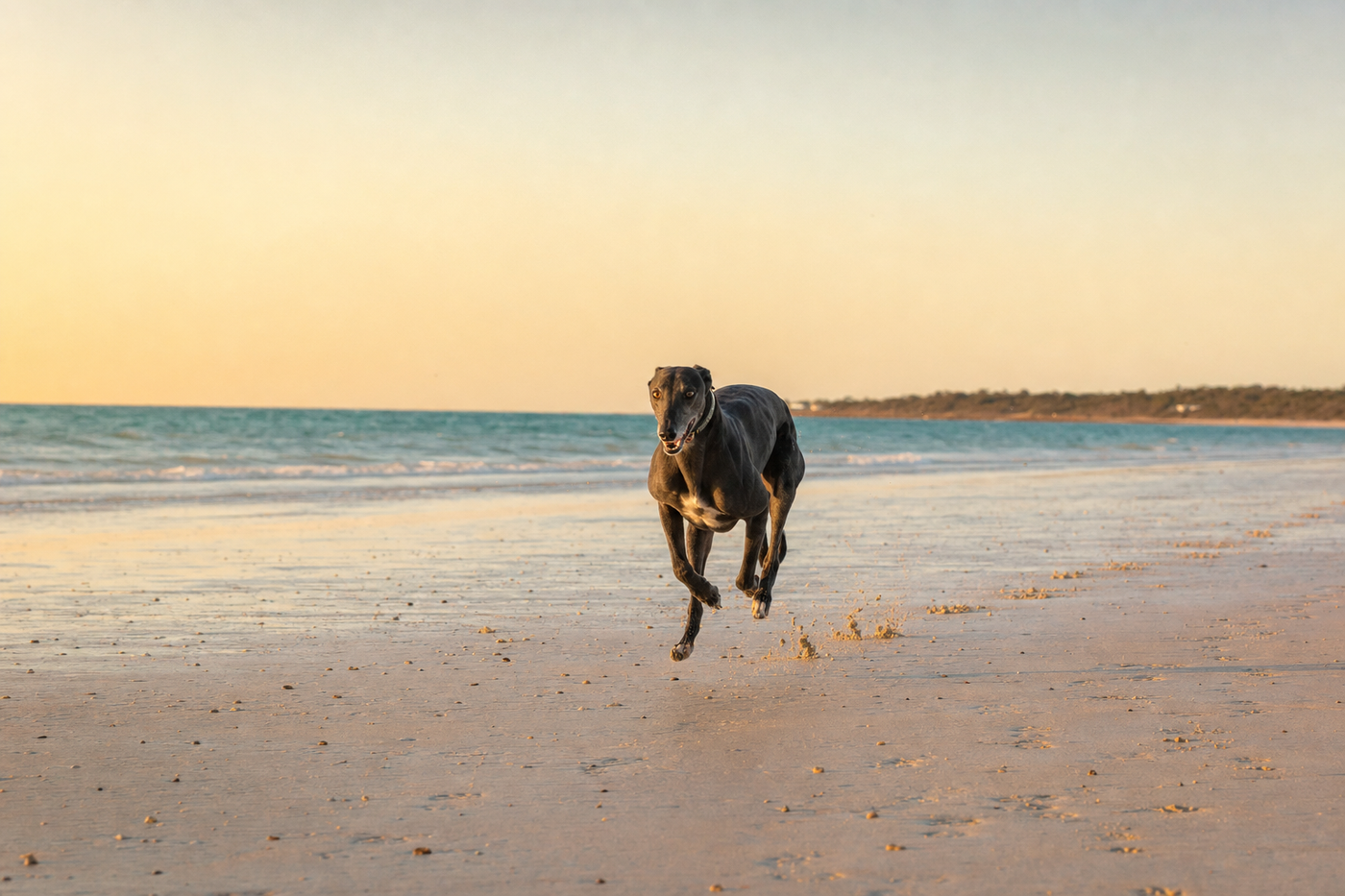
Greyhounds can suffer life-threatening heatstroke within minutes in Australian heat. Never leave your dog unattended in vehicles or direct sunlight, and recognise signs of heat stress: excessive panting, drooling, letharness, or collapse. Move to air-con immediately and contact a vet.
Greyhounds have a strong prey drive and will chase small animals, potentially causing serious injury to other pets or wildlife. Always use secure fencing and avoid off-lead areas unless completely enclosed and checked for escape routes.
Why greyhounds need different travel planning
Greyhounds are built for speed, not endurance, and they struggle in heat far more than other breeds. Their thin skin, minimal body fat, and short coat leave them vulnerable to sunburn and heatstroke. I learned this the hard way driving to the Blue Mountains in November when my greyhound started panting heavily after just two hours in the car.
Their temperament also changes travel plans. Most greyhounds come from racing backgrounds and carry anxiety about new spaces, loud noises, and unfamiliar routines. They're sensitive souls despite their athletic appearance. Your greyhound will need quiet accommodation away from busy streets, consistent meal times, and a safe space to retreat when overwhelmed.
Understanding these traits shapes every decision you make: where you stay, how long you drive, what activities you attempt, and even what time of day you travel. A beach holiday that works perfectly for a Labrador might exhaust your greyhound within hours.
Managing heat on Australian roads and at destinations
Heat management is non-negotiable when travelling with a greyhound anywhere in Australia. During summer months from December to February, plan drives for early morning or late evening only. A 6am departure from Sydney heading to the Central Coast keeps temperatures manageable for the dog, unlike a midday drive that puts your greyhound at serious risk.
Never leave your greyhound unattended in a car, even with windows cracked and the engine running. The interior temperature can reach 50 degrees Celsius in under 15 minutes on a 30-degree day. I've seen it happen at a cafe stop in Newcastle. If you need to shop or eat without your dog, one person stays with the dog in an air-conditioned space.
At your destination, choose accommodation with air conditioning as standard. Greyhound-friendly farm stays around the Adelaide Hills often have aircon in bedrooms but not outdoor areas. Ask hosts directly whether they can maintain cool spaces. During the day, keep your dog indoors during peak heat hours between 11am and 4pm. A beach trip to Coffs Harbour works only if you go before 10am, return to air-con by midday, and avoid the beach entirely during peak hours.
What we recommend
Some links below are affiliate links. Pawtrips may earn a commission at no extra cost to you.
PitPat Dog GPS Tracker - No Subscription Needed
When travelling across unfamiliar areas, a GPS tracker gives you peace of mind if your greyhound escapes or bolts. PitPat requires no ongoing subscription and works across Australia, which is essential for anxious greyhounds prone to running when stressed in new environments.
Finding pet-friendly accommodation that suits their anxiety
Greyhounds thrive in quiet, private spaces rather than bustling pet-friendly resorts. Countryside cottages, farm stays, and holiday homes rented through platforms work far better than busy pet hotels or shared lodge facilities. When I stayed at a beachside villa near Byron Bay with my greyhound, the private backyard and peaceful location meant she relaxed completely. Compare that to a pet-friendly motel near the highway where traffic noise kept her stressed the entire stay.
When searching for places, prioritise quiet locations away from main roads and other guest dogs. Email hosts before booking to ask about their experience with anxious dogs, whether they have secure fencing, and whether neighbours are nearby. Some hosts are used to reactive dogs. Others have never dealt with a nervous greyhound and won't understand why your dog can't just join in at a communal pool area.
Always request ground-floor or self-contained accommodation. Your greyhound needs direct access to an outdoor toilet area without passing through shared spaces. A townhouse in the Yarra Valley with private courtyard access beats an upstairs unit in a tourist complex. Bring your dog's own bed, bowls, and toys so familiar items reduce anxiety in the unfamiliar space.
Safe exercise and socialisation while travelling
Greyhounds have prey drive bred into them over centuries of racing. During travels around Australia, they will chase small animals: rabbits, wallabies, possums, and even other people's cats. This means exercise must happen in securely fenced areas only. Never rely on a lead for exercise at a destination, even if your dog is normally well-trained. The instinct to chase can override training in a fraction of a second.
Seek out designated off-lead dog parks with double-gated entry systems rather than open fields. The dog parks around Brisbane's suburbs have secure fencing and water stations. Your greyhound will exercise safely while you watch from a bench. Beaches work for exercise only if they're quiet and your dog has strong recall. Crowded holiday beaches near Sydney bring too many distractions and risks.
Socialisation with other dogs while travelling depends on your individual greyhound's temperament. Some are friendly. Others are prey-driven toward small dogs. Be honest about your dog's behaviour before selecting group activities or shared accommodation. A greyhound-specific meetup group (they exist in Melbourne and Perth) is safer than forcing your anxious dog into random dog social situations at markets or parks.
Dog Separation Anxiety Collar, Four Pack
Greyhounds struggle with separation anxiety in holiday accommodation. These calming collars use pheromone technology to reduce stress naturally, helping your greyhound stay calm when left alone during meals or quick outings around your destination.
Road trip logistics and packing essentials
Long drives require breaks every two hours for your greyhound to toilet, drink water, and stretch legs. This changes your travel timeline completely. A direct drive from Brisbane to the Sunshine Coast takes 90 minutes but should take you three hours when accounting for a dog break halfway. Plan rest stops at quiet locations with shade: rest areas off the M1, parks with tree coverage, or quiet streets of small towns like Beerwah.
Pack a travel kit specific to greyhounds. Include a collapsible water bowl and bottled water (some dogs get sensitive stomach upset from unfamiliar water sources). Bring their regular food because changing diet during travel can cause digestive issues that ruin your holiday. Pack a dog bed or blanket for the back seat to create a familiar space, medications if your dog takes them, and recent photos in case your greyhound gets lost.
Arrange a secure space in your vehicle. A dog harness or travel crate prevents your greyhound from becoming a projectile if you brake suddenly. Some greyhounds prefer being tethered to a seat belt with a harness. Others feel safer in a rear seat dog barrier. Test your setup on short local drives before committing to long-distance travel.
Kurgo Dog Food Travel Bag: Kibble Carrier, 5 Pound
Transporting your greyhound's regular food in a dedicated carrier keeps it fresh and prevents spills across your car. This bag is compact enough for road trips and helps maintain consistent nutrition while travelling, which is crucial for greyhounds with sensitive digestion.
Managing separation anxiety in new environments
Most greyhounds experience separation anxiety when left alone in unfamiliar accommodation. They're pack animals who've spent their lives around handlers and other dogs. Arriving at a quiet cottage in the Adelaide Hills and then leaving your dog alone while you go to dinner will result in destructive behaviour or excessive barking that upsets neighbours.
Build in solo time gradually. Spend your first day at a destination doing things with your greyhound. On day two, try leaving for 15 minutes while they're calm and settled. Extend gradually to 30 minutes and then an hour. Some greyhounds never tolerate being left alone and that's okay. Plan activities that include your dog or split outings with your travel companion.
Ask accommodation hosts if they allow dogs to spend time in shared spaces while you're out. Some farm stay owners will let your greyhound stay in a living room while you're gone. Alternatively, hire a dog sitter through a local service for day trips. The cost adds up but prevents stress for your dog and property damage that ruins your holiday and the host's opinion of travelling dogs.
Health and safety preparations before departure
Visit your vet two weeks before travelling to ensure your greyhound's vaccinations are current and they're healthy for travel. Ask about any regional health risks. If you're heading to northern Queensland, discuss tick prevention because paralysis ticks are serious. If you're visiting coastal areas, discuss heartworm prevention relevant to that region.
Pack a portable first aid kit including any medications your dog takes regularly, anti-diarrheal medication for upset stomachs, and basic wound care supplies. Keep your greyhound's microchip details updated with your travel accommodation address in case they escape. Many greyhounds are runners, and a microchip is your best chance of recovery if your dog bolts.
Bring vaccination records in case you need emergency vet care while travelling. Store vet clinic phone numbers for each region you visit. The emergency vet in Port Macquarie operates 24 hours and I've needed them once during a holiday for gastro treatment. Research ahead so you know where to go if something goes wrong.
Seresto Flea & Tick Collar for Large Dogs Over 8kgs
Different regions of Australia have different tick and flea risks. A Seresto collar provides eight months of continuous protection without monthly applications, making it ideal for travelling greyhounds who'll be exposed to unfamiliar parasites across multiple states.
Adapting activities to suit greyhound limitations
Most standard tourist activities don't work well for greyhounds because they involve heat, crowds, or prolonged unsecured time. A wine tour in the Barossa Valley won't work if your greyhound sits in a hot car between vineyard stops. A bustling markets visit stresses most greyhounds. Hiking in the Blue Mountains works only on mild days with plenty of shade and water stops.
Instead, choose greyhound-friendly activities: quiet beach walks in early morning, exploring small heritage towns where your dog can walk on lead through quiet streets, visiting quieter natural attractions like forest parks where you can stay off busy trails. A visit to Murramarang near Batehurst lets your greyhound walk along quiet beaches before crowds arrive. The Lake District near Canberra has peaceful walking paths ideal for anxious dogs.
Accept that some holidays will revolve around your dog's needs rather than your preferences. A holiday where you relax at your accommodation with your greyhound, take morning walks, and enjoy quiet local exploration often beats attempting a packed itinerary that stresses your dog. Your greyhound's wellbeing determines the success of your trip far more than ticking off tourist attractions.
Pet-friendly stays
Searching for the right greyhound-friendly accommodation is half the battle when planning Australian holidays. This platform helps you find quiet, suitable places that genuinely welcome anxious dogs rather than just tolerating them.
Plus early access to new guides and partner deals.
No spam. Ever. Just the good stuff for you and your pet.