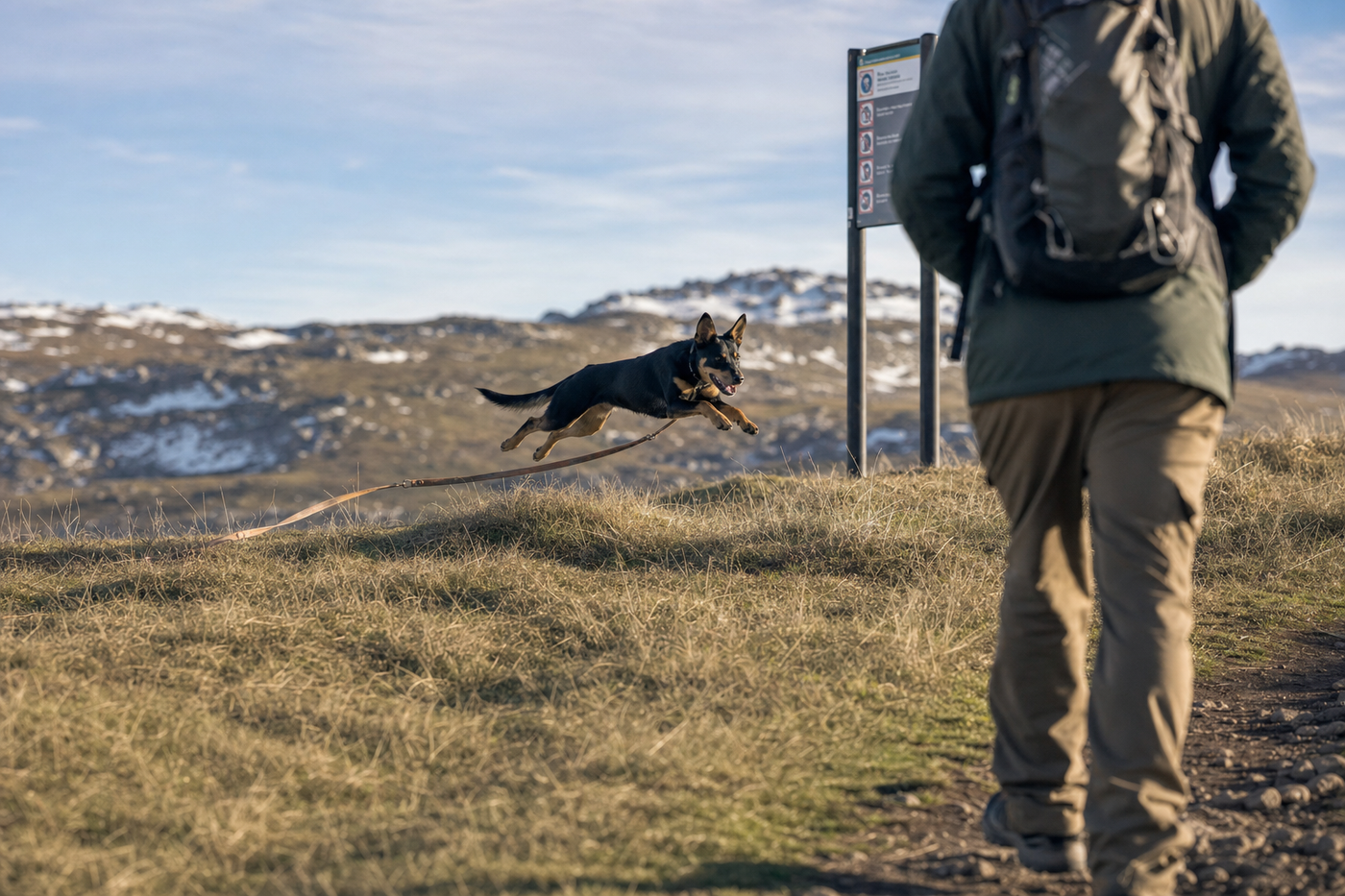
Breaking leash laws can result in fines ranging from $300 to over $3000, plus impoundment of your dog in serious cases. Always verify the local rules.
Dogs off-leash in unfamiliar areas risk serious injury or death from traffic, wildlife, or hazards you don't recognise. Leash laws exist because this happens regularly.
Why Leash Laws Matter When Travelling with Dogs
I learned about leash laws the hard way when I took my border collie Bess from Melbourne to Byron Bay and assumed the rules would be the same. They weren't. What felt like a short lead in Victoria meant a breach in New South Wales, and I nearly copped a fine at a beachside reserve.
Leash laws exist to protect your dog, other animals, and people sharing public spaces. A dog running loose can chase livestock on farms, frighten neighbours' pets, or bolt into traffic. When you're travelling through unfamiliar areas, your dog also doesn't know the local hazards. That beachside cliff or fast road might look just like home to them.
Each Australian state and territory sets its own rules, and many councils add their own variations on top. A dog that's perfectly legal off-leash in one suburb might break the law three kilometres away. Before you pack the car and head off, you need to know the specific rules for where you're staying and the places you plan to visit.
What we recommend
Some links below are affiliate links. Pawtrips may earn a commission at no extra cost to you.
Dog Lead 1.8m Compliant
A properly fitted 1.8 metre lead is the baseline for travel across most Australian councils. This length is legal in Victoria, NSW, Queensland, and most other states, making it the safest choice when moving between destinations. Leather leads are durable and comfortable for long walks through unfamiliar places.
New South Wales Leash Requirements Explained
New South Wales is strict about leashes, and I've watched plenty of travellers get caught out here. In most NSW public places, your dog must be on a leash no longer than 2 metres. That's longer than Victoria's standard 1.8 metres, but shorter than what some people assume.
The rules get tighter in towns and villages where dogs must be on a lead under 1 metre in some council areas. Sydney councils vary: Waverley and Randwick have tight restrictions in certain zones, while outer western suburbs often have more generous off-leash areas. Beaches around Sydney allow dogs off-leash before 9am and after 5pm on most patrolled beaches, but this changes by season and by beach.
Breed-specific laws in NSW mean certain dogs might need a muzzle in public. Restricted breeds and dogs with a history of aggression fall under these rules. When I travelled with a young bull terrier cross named Bro through the Central Coast, I carried a muzzle even though Bro had never shown aggression, simply because the local council required it. Check with the specific local council before you arrive, not when you're already there.
Victoria's Dog Lead Laws and Off-Leash Areas
Victoria requires dogs to be on a lead of 1.8 metres or less in most public places. This is the standard I grew up with, and it felt normal until I travelled to Queensland and realised other states had different rules entirely. Councils around Melbourne and regional Victoria have designated off-leash areas, and these are clearly marked in most suburbs.
Ballarat, Geelong, and areas around the Dandenongs all have specific dog parks where your dog can run free under your voice control. However, voice control is key. Your dog needs to come back immediately when you call, or you've breached the law even in an off-leash zone. I once saw a golden retriever ignored by its owner in an off-leash area in Footscray, and a council officer was taking notes.
Victoria also has breed-specific restrictions, though they're less strict than NSW. Dogs declared dangerous or menacing may need to wear a muzzle and be on a lead shorter than 1 metre. Councils issue these declarations based on the dog's history, not breed alone. Before you travel to a regional Victorian town, ring the local council's ranger service and ask about their specific rules for your dog type.
Dog Collar and Leash Travel Set
A quality collar and leash set designed for travel ensures you have backup equipment if one gets damaged. When travelling between states with different leash requirements, having adjustable options means you can meet local rules without carrying multiple leads.
Queensland Rules Are More Relaxed for Travellers
Queensland feels like a relief after the stricter eastern states. Most public places in Queensland require dogs to be on a lead, but the lead can be up to 2 metres or longer in some areas. I've travelled with dogs through Brisbane, the Gold Coast, and Cairns, and the enforcement feels less rigid than in Victoria or NSW.
Queensland beaches are genuinely lovely for dogs. Many coastal towns allow dogs off-leash on beaches outside peak swimming times. The Gold Coast beaches have specific dog-friendly sections, and Cairns has relaxed rules in winter months when fewer swimmers are around. Always check the specific beach or reserve before you let your dog loose, as these rules change.
Breed restrictions in Queensland apply to dangerous dogs, not breed types alone. A dog becomes restricted based on behaviour and incidents, not whether it's a particular breed. This means your dog won't automatically be banned or muzzled just for being a certain type. However, if your dog has a history of aggression or attacking, Queensland councils will absolutely restrict it. When I drove a rescue dog with a biting history from NSW to Queensland, the adoption group made me aware of what would happen if she breached the law again.
Western Australia's Lead Laws for Visitors
Western Australia requires dogs to be on a lead in public places, typically up to 2 metres. Perth councils vary in their enforcement and off-leash area provisions. Some suburbs like Cottesloe and City Beach have generous dog parks, while others require leads everywhere except designated areas.
Western Australia has tight restrictions on certain breeds deemed dangerous. Dogs like pit bulls and their crosses face muzzling requirements in public. I travelled with a blue heeler cross through Perth suburbs and had to carry a muzzle even though she'd never been aggressive, simply because the local council had flagged her type as requiring one in certain zones.
The Perth metropolitan area has more rules than regional WA. Once you head towards Margaret River, the Wheatbelt, or up towards Geraldton, you'll find smaller towns with less formal enforcement but still the same legal requirements. Beaches in Perth often have off-leash sections, but these are clearly marked and limited to specific hours. Scarborough Beach and Cottesloe both have dog-friendly zones with clear rules posted.
Dog Microchip and ID Tag
Microchipping is essential when travelling. If your dog escapes in an unfamiliar area, a microchip and ID tag with your current phone number dramatically increase the chances of reunion. Many councils check microchips before releasing dogs, making this your backup to leash laws.
South Australia, Tasmania, and Territory Variations
South Australia typically requires leads no longer than 2 metres in public. Adelaide councils each set their own rules for off-leash areas, and these vary considerably between inner suburbs and outer regions. Glenelg and Port Elliot are popular with travelling dog owners because they have relaxed rules in specific zones, though you'll still find councils in the Adelaide Hills with stricter policies.
Tasmania feels more relaxed overall, with less formal enforcement than mainland states. Dogs generally need to be on leads in public, but Tasmania's smaller population means fewer conflicts in most areas. Hobart and Launceston have off-leash parks, and regional towns often have informal arrangements. However, don't assume this means no rules apply. Stock farmers and rural property owners still have rights to protect their land.
The Northern Territory and Australian Capital Territory have their own rules. Darwin allows dogs on leads in most public places, with designated off-leash areas in suburbs. Canberra has a reputation as very dog-friendly, with numerous off-leash parks and trails. However, ACT still requires leads in shopping areas and many public spaces. Alice Springs has limited dog facilities, and leads are mandatory in town areas. Always contact the relevant council before travelling to remote regions.
Dog Muzzle for Breed-Specific Areas
If your dog is subject to breed-specific legislation in certain council areas, a comfortable, well-fitted muzzle is essential. Basket muzzles allow panting and drinking, making them suitable for Australian heat. Always carry one when travelling through areas with breed restrictions.
Breed-Specific Legislation: What You Need to Know
Breed-specific legislation varies across Australia, and it's one of the most confusing parts of travelling with dogs. Some states and councils restrict certain breeds altogether, while others focus on individual dog behaviour rather than breed type.
Staffordshire bull terriers, pit bulls, and certain other breeds face restrictions in some councils but not others. NSW has restricted breed lists that differ by council. Victoria focuses more on temperament than breed. Queensland avoids breed bans entirely, focusing instead on individual dog incidents.
If you have a breed that might be restricted, carry documentation from your vet confirming temperament testing or behavioural assessment. Some councils will accept third-party behavioural assessments showing your dog poses no threat. I travelled with a staff cross through multiple states and always carried a letter from my vet describing her perfect temperament, which helped when local officers questioned her.
Muzzle requirements kick in for restricted dogs in some areas. Muzzles must be well-fitted and comfortable. Never use a basket muzzle that prevents your dog from panting, especially in Australian heat. Travel with the correct muzzle for your dog type and practise fitting it at home before your trip. A stressed dog in an unfamiliar place wearing an ill-fitting muzzle is a recipe for disaster.
How to Find Rules for Your Specific Destination
The easiest way to find leash laws for your destination is to contact the local council before you travel. I now make this a standard part of my trip planning. Each council has a ranger service or animal management department, and they'll tell you exactly what applies to your dog.
Go online and search for the council's official website. Most councils list their dog control ordinances publicly. If you're staying in a specific town, search for that town's council and look for animal management or dog control pages. Ring the council if you can't find information online. A five-minute phone call before you leave home saves arguments and fines when you arrive.
If you're staying at a pet-friendly accommodation, ask the owners about local rules. They live there and know the enforcement practices, the safe places to walk dogs, and the rules that actually matter versus the ones nobody enforces. When I stay at pet-friendly holiday rentals, the owners often give me a handwritten map of off-leash areas and places to avoid. This local knowledge is invaluable.
Pet-Friendly Stays Compliant with Local Laws
Accommodation owners who specialise in pet travellers understand local leash laws and can advise on safe walking routes, off-leash areas, and council rules specific to their region. Booking through verified pet-friendly platforms ensures you're staying somewhere prepared for your dog.
Plus early access to new guides and partner deals.
No spam. Ever. Just the good stuff for you and your pet.