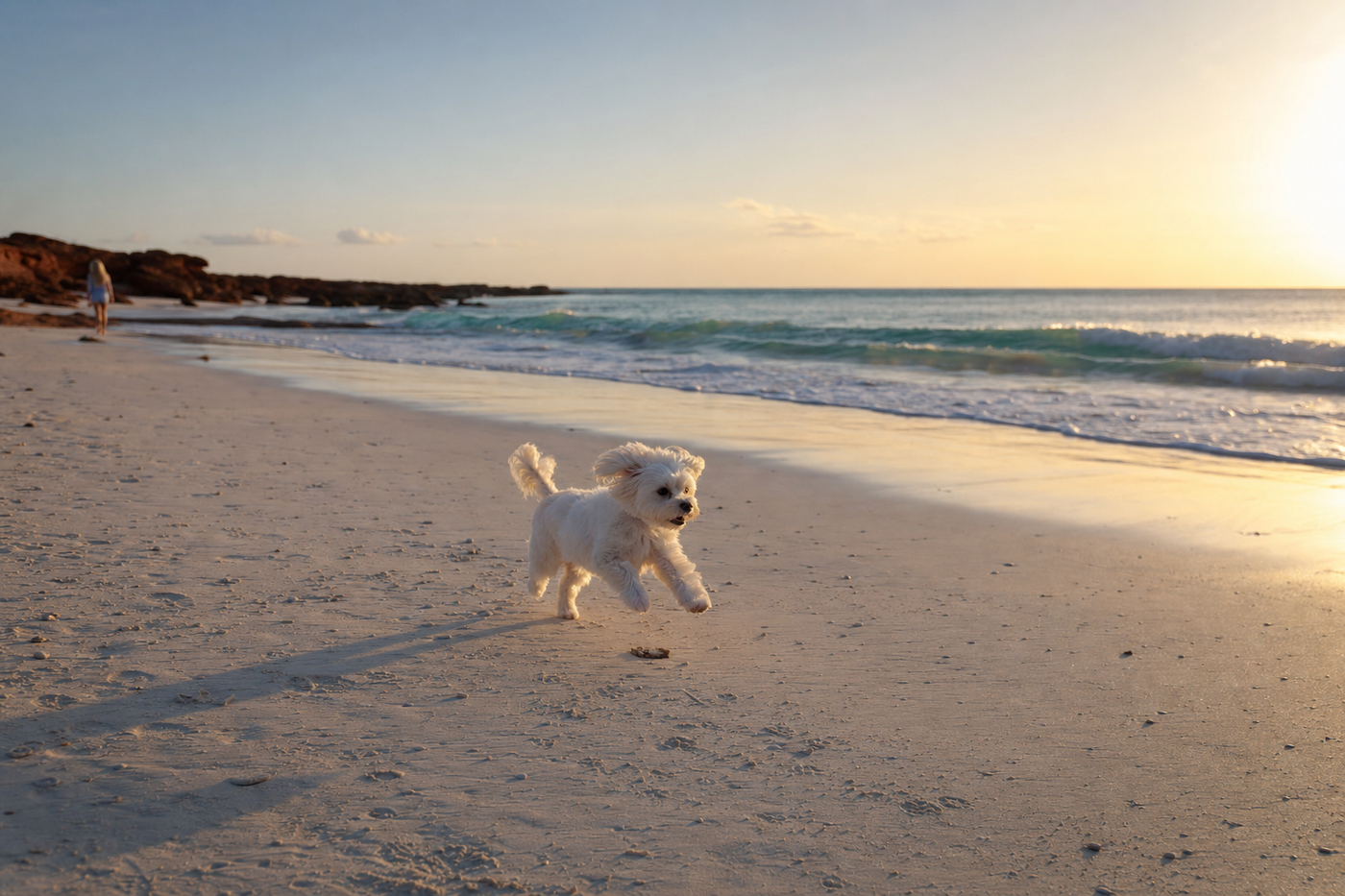
Never leave your Maltese in a parked car during Australian summer, even with windows open, because small dogs overheat rapidly and can suffer fatal heat stroke within minutes
Check for snakes and dangerous wildlife in your accommodation area before letting your Maltese explore outdoors, because small breeds are vulnerable prey and snake bites are life-threatening
Why Maltese Make Great Travel Companions
Maltese dogs weigh between 2 and 4 kilograms, which means they fit on your lap in the car and squeeze into most airline cabins. Their small size solves half the travel puzzle before you even leave home. I learned this the hard way after hiring a bigger breed and spending half my holiday managing a anxious dog in the back seat.
These little dogs bond intensely with their owners, so they actually prefer travelling with you rather than staying home. Your Maltese would rather sit beside you at a Cafe del Mar beachside picnic than wait alone at a pet minder's place. They also adapt well to new environments as long as they have you nearby, which makes holiday planning less stressful. Just remember that their small bladder means toilet breaks every two to three hours on a road trip.
Preparing Your Maltese for Car Journeys
Most Maltese owners underestimate how much their dog moves around in a car, especially on winding coastal roads. A booster seat keeps your Maltese at window level and prevents them from sliding across the back seat during sharp turns. I started using one after my dog crashed into the door panel near Batemans Bay and decided never again.
Take your Maltese on short drives around your neighbourhood first to build confidence. Try five-minute trips to the local park before attempting a three-hour drive to the Blue Mountains. Bring water, a collapsible bowl, and stop every two hours so your dog can stretch and toilet. Pack a familiar toy or blanket with your scent to reduce motion sickness and anxiety. Some Maltese do better with a calming product, so ask your vet about options before a long journey.
What we recommend
Some links below are affiliate links. Pawtrips may earn a commission at no extra cost to you.
Small dog booster car seat
A booster seat keeps your Maltese secure and at window level during car journeys, reducing anxiety and preventing movement around the vehicle. This is the single most important safety investment for road trips across Australia.
Managing Coat Care While Travelling
The Maltese coat is white, silky, and tangles faster than you'd expect when your dog is wet from beach swimming or humid Brisbane weather. Travelling without basic grooming supplies means arriving home with a matted coat that takes weeks to repair. A portable grooming kit lets you brush your dog every evening, which takes ten minutes and saves you heartbreak.
Use a collapsible grooming brush and a small metal comb designed for small breeds. Brush your Maltese daily when travelling, especially if you're visiting coastal areas or staying in humid regions. If your dog gets wet from rain or beach time, dry them thoroughly before the coat dries in a tangled state. Many pet-friendly accommodation places have outdoor areas where you can safely brush your dog without worrying about shedding inside someone's home.
oneisall 4 in 1 Dog Grooming Kit
A portable grooming kit with brushes and combs designed for small breeds helps you maintain your Maltese's coat daily while travelling. Prevents matting and tangles that develop quickly in humid Australian conditions.
Choosing Pet-Friendly Accommodation in Australia
Not all Australian hotels accept dogs, and many that do charge cleaning fees or pet deposits between 50 and 150 dollars per night. Start your search by filtering for pet-friendly properties before you book flights or plan your route. I discovered this after calling a beachfront hotel in Port Macquarie and being told no dogs allowed, which forced me to change my entire trip.
Check accommodation websites specifically for pets or use dedicated pet-friendly booking platforms. Read reviews from other dog owners to learn what the place is really like, because pet-friendly doesn't always mean dog-friendly. Some hotels isolate your dog in a bathroom if you leave the room, which stresses them out. Ask whether your Maltese can stay in the main room with you and whether they provide food bowls or water. Many regional farmstays and holiday rentals across Victoria, Tasmania, and regional NSW are more relaxed about small dogs than city hotels.
Pet-friendly stays
Search and book accommodation across Australia that explicitly welcomes small dogs. Filter for pet-friendly options before you plan your route to avoid last-minute booking stress.
Flying with Your Maltese Across Australia
Most Australian airlines allow small dogs under 7 kilograms in the cabin if you book early and pay a pet fee between 80 and 120 dollars each way. Qantas, Virgin Australia, and Rex all have pet policies, but availability is limited to around four dogs per flight. Book your dog's seat at the same time you book yours, because waiting until check-in often means your Maltese travels in the cargo hold instead.
Visit your vet two weeks before flying to get a health certificate if you're flying to Western Australia or Tasmania. Get your Maltese used to their travel carrier at home by leaving it open and rewarding them for entering it. During the flight, keep your dog calm with a familiar toy or blanket. The cabin is noisy and unfamiliar, so your Maltese might experience anxiety. Bring a collapsible water bowl for airport layovers, because airport water bowls are communal and potentially carry germs. Most airlines provide a relief area at major airports like Sydney, Brisbane, and Melbourne where your dog can toilet before boarding.
Keeping Your Maltese Safe in Unfamiliar Places
A microchip and updated collar ID tag are non-negotiable when travelling away from home. Dogs go missing in unfamiliar places because they panic or slip leashes at rest stops. Update your microchip details before you travel so any vet or council can reach you immediately if your dog is found.
Keep your Maltese on a lead whenever you're outside accommodation, even in supposedly secure areas. Your dog doesn't know the local geography and might bolt after a bird or chase a scent. Consider a GPS tracker if you're travelling to remote areas or staying anywhere your dog might escape. Take photos of your Maltese before you travel so you have recent images for lost dog posters if needed. Ask accommodation staff about wildlife in the area, because snakes in regional Queensland and Tasmania pose real risks to small dogs.
PitPat Dog GPS Tracker - No Subscription Needed
Track your Maltese's location in real time when travelling to remote areas or unfamiliar regions. No ongoing subscription means you're protected from the moment you activate it.
Flea and Tick Prevention While Travelling
Australia's warm climate means fleas and ticks are active year-round, and your Maltese is at higher risk in unfamiliar environments where they might encounter wildlife. A flea and tick collar works better than treatments you apply monthly because it lasts longer and requires less planning when you're moving between locations. Start prevention two weeks before your trip so you're not applying new treatments while travelling.
Choose a collar rated for your dog's weight, because Maltese are typically small enough for products designed for dogs under 8 kilograms. Pack your prevention supplies in a dedicated pouch so you don't forget them at a holiday rental. Check your dog's skin daily when travelling through bushland or regional areas. Look behind the ears, between toes, and along the belly where ticks like to hide. If you find a tick, photograph it before removing it so you can identify the species, then monitor your dog for signs of illness over the following weeks.
Seresto Flea & Tick Collar for Large Dogs Over 8kgs
Long-lasting flea and tick prevention that works for eight months, eliminating the need to apply treatments while you're travelling between locations. Start two weeks before your trip for maximum protection.
Planning Your Route and Rest Stops
Long road trips exhaust Maltese dogs mentally rather than physically, because the car environment overstimulates their senses. Break your journey into shorter segments with proper rest stops every two hours. A drive from Sydney to Melbourne takes about nine hours without stops, but you'll need at least twelve with proper breaks for your dog.
Use rest stops with grassed areas where your Maltese can toilet safely away from other dogs. Some motorway service stations have designated pet areas, but many don't, so plan your stops accordingly. Pack a portable water bowl and always offer water at rest stops, even if your dog doesn't ask for it. Consider overnight accommodation halfway through long drives rather than pushing through. Tired dogs get anxious and stressed, which creates behaviour problems that ruin your holiday experience.
Plus early access to new guides and partner deals.
No spam. Ever. Just the good stuff for you and your pet.