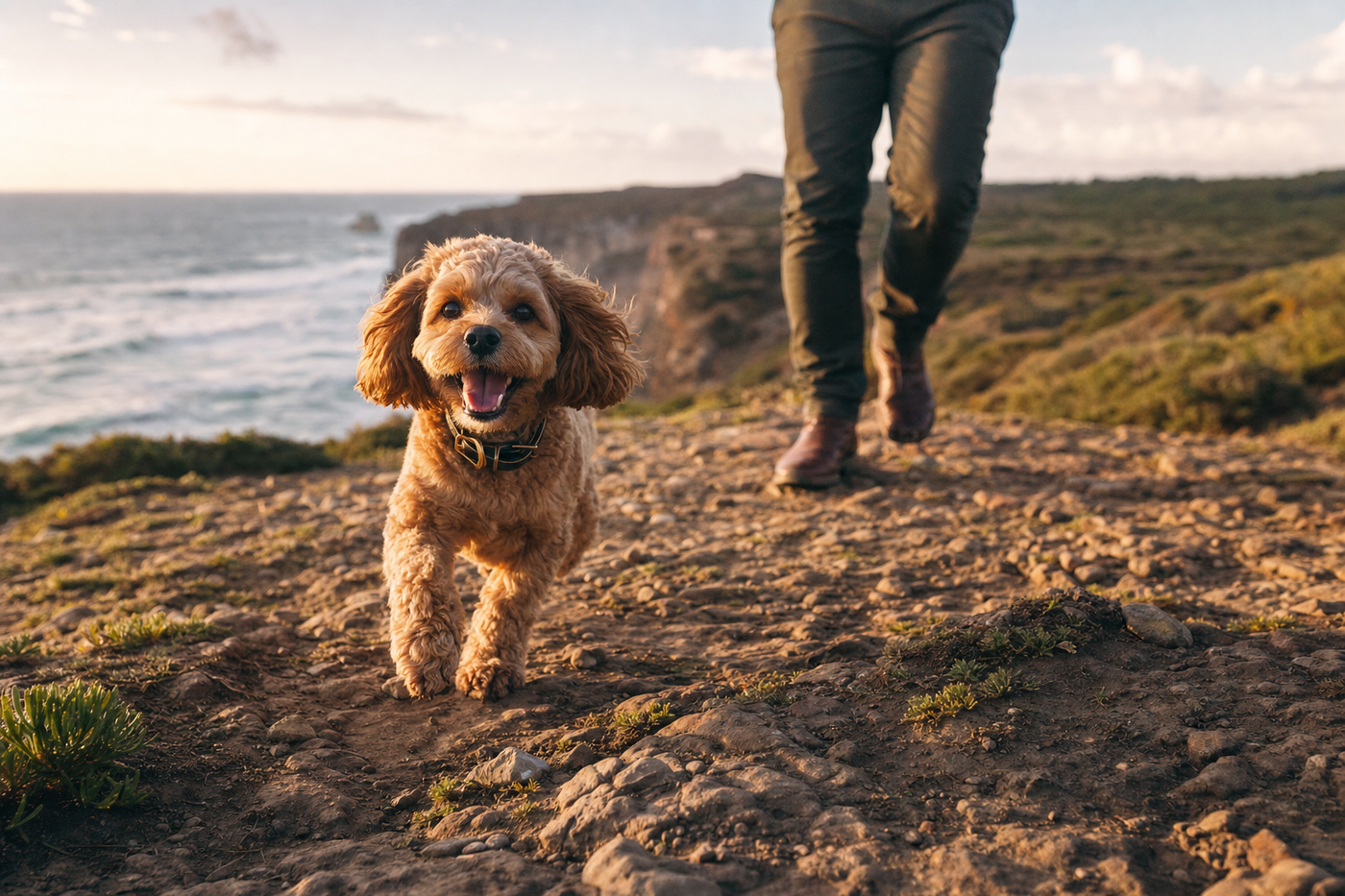
A microchip without current registration offers zero protection. Your dog will be identified as belonging to no one if found. Always register immediately after microchipping and update your details before travelling.
Council rangers conduct surprise checks at dog parks, beaches, and rest stops across Australia and can issue on-the-spot fines of 300 to 1000 dollars for unregistered or unchipped dogs. Fines accumulate quickly if you travel through multiple states without updating registrations.
Why Australia requires microchips for travelling dogs
Every state and territory in Australia has made microchipping compulsory for dogs, and this rule applies whether your dog travels or stays home. The microchip is a tiny electronic device, about the size of a grain of rice, that sits under your dog's skin and holds a unique identification number. When council rangers or vets scan the chip, they can instantly access your contact details and medical history from a national database. I learnt this the hard way when my border collie mix escaped during a stop near Dubbo in New South Wales. A local ranger found him within hours, scanned the chip at the council office, and rang me immediately.
The law exists because lost dogs without microchips often end up in shelters with no way to contact their owners. Microchips have reunited thousands of dogs with families across Australia every year. Without one, your dog faces potential impoundment, and you face significant fines ranging from 300 to 1000 dollars depending on the state. Travelling dogs are especially vulnerable because they are in unfamiliar territory where they might bolt at unfamiliar sounds or sights. Microchipping gives you peace of mind that someone can identify and return your dog no matter where you roam.
What we recommend
Some links below are affiliate links. Pawtrips may earn a commission at no extra cost to you.
Dog microchip and ID tag
A microchip is mandatory for travelling dogs in Australia, but you need a backup ID tag on your collar as well. This combination ensures your dog can be identified and returned quickly if lost during travel. Both work together to maximise your chances of reuniting with your dog anywhere in Australia.
State-by-state microchipping requirements you need to know
New South Wales requires all dogs to be microchipped before they reach 12 weeks old, and the chip must be registered with the local council. Victoria enforces the same 12-week rule, but you must register with the Victorian Pet Registry rather than individual councils. Queensland has similar rules, though some councils have slightly different registration fees. South Australia requires microchipping but allows it up to 12 months of age before a fine kicks in. Western Australia mandates chipping, and the Microchip Registry must hold your details.
I travelled from Sydney to Melbourne with my kelpie and discovered that Victoria's registry is separate from New South Wales records. I had to update my registration details in Victoria's system before we arrived, not after. Tasmania, the Northern Territory, and the Australian Capital Territory all require microchips as well, but registration processes vary. When you cross state lines, your dog's microchip number stays the same, but the registry information might need updating. Check each state's local government website or your vet before you travel so you know exactly what paperwork to bring and what updates to make.
How to get your dog microchipped before travelling
Your veterinarian is your first stop for microchipping, and most vets in Australia can do the procedure in a single appointment. The vet will insert the microchip using a hollow needle, usually without requiring sedation, though some anxious dogs benefit from calming medication. The procedure takes less than five minutes and costs between 20 and 80 dollars depending on your location and whether your vet bundles it with registration. Once chipped, your vet will give you a certificate with the microchip number, which you must keep safely.
After the chip goes in, registration is the critical next step, and you cannot skip this part. Your vet can often register the chip directly with the national or state database, but confirm this before you leave the clinic. If your vet does not register it, you must do it yourself through your state's registry website or by contacting the council. The registration links your microchip number to your name, address, phone number, and email. Without registration, the chip is useless because no one can contact you if your dog is found. Update your registration details before you travel, especially if you are moving between states or staying in temporary accommodation.
Dog collar with QR code
QR code collars link directly to your dog's online profile and travel details without requiring a phone call. When someone finds your dog, they scan the code and see your contact information and current location instantly. This is especially useful when travelling because it works across all states without registry lookups.
What happens if your dog is found without a registered microchip
If your dog is picked up by council rangers or found by another person and scanned, an unregistered chip will show a number with no attached information. Rangers cannot contact you, so your dog goes into the local pound or shelter, often held for only seven to ten days before further action. Many dogs are transferred to rescue organisations or rehomed without their original owners ever knowing what happened. I met a woman in Adelaide who lost her Jack Russell for two weeks because her microchip was registered to an old address she had not updated. When the council finally tracked her down through outdated records, her dog was already in a rescue shelter pending rehoming.
Fines for travelling with an unregistered microchipped dog range from 300 dollars in some areas to over 1000 dollars in others. Council rangers conduct random checks at dog parks, beaches, and rest stops across Australia, and they can fine you on the spot. Beyond fines, the real danger is losing your dog permanently because no one can identify or locate you. An unregistered chip offers no protection whatsoever. The system only works if your details are current and linked to that microchip number in the official registry.
Updating your microchip registration when you travel between states
When you travel from one state to another, your dog's microchip number remains the same, but the registry system you use might change. New South Wales uses a different registry system than Victoria, and both differ from Queensland and Western Australia. Before you leave your home state, contact your registry and update your contact details to include a mobile phone number and email address that will work while you travel. Some registries allow you to add temporary addresses or notes about your travel plans.
If you plan to stay in a new state for more than a few weeks, register your dog with that state's registry as well. This takes only minutes and ensures that if your dog is found, the local rangers can track you down immediately. Some states allow dual registration, while others prefer you to deregister from the old state and register in the new one. Your vet in the new state can help you with this process. Keep copies of all your registration certificates and confirmations on your phone so you can access them quickly if needed. When you return home, update your original registry to confirm your current address and contact details.
PitPat Dog GPS Tracker - No Subscription Needed
A GPS tracker gives you live location data and safe zone alerts while your dog travels across Australia. Unlike microchips that only help after your dog is found, a GPS tracker lets you locate your dog immediately if he wanders off. The PitPat requires no ongoing subscription, making it cost-effective for long-term travelling.
Combining microchips with ID tags and GPS trackers for extra safety
A microchip is your backup plan, but ID tags on your dog's collar are your first line of defense when your dog goes missing. A tag with your name and phone number means someone can call you immediately without needing a scanner. I always attach both a traditional engraved tag and a tag with a QR code that links to my dog's profile online. Travellers often swap between multiple collars, so I have ID tags on every collar my dog wears.
GPS trackers offer real-time location data and can alert you the moment your dog leaves a designated safe area. Devices like the PitPat tracker work without ongoing subscriptions and pair with your phone via an app. These trackers are especially valuable when travelling because you can set a perimeter around your accommodation and receive instant notifications. While GPS trackers are more expensive upfront, they provide peace of mind that a microchip alone cannot offer. Layer your safety strategies by combining microchips, ID tags, and GPS technology for maximum protection while your dog travels across Australia.
What to carry and show council rangers if stopped during travel
When you travel with your dog, always carry proof of microchipping and registration. Keep a digital copy on your phone and a physical copy in your car or accommodation. Your microchip certificate shows the chip number and the date it was inserted. Your registration certificate shows the chip number linked to your contact details and current address. Council rangers may ask to see these documents at any time, and they can issue a fine on the spot if documentation is missing.
I also carry vaccination records and a recent photo of my dog because rangers sometimes ask for identification to confirm I am the dog's owner. Some councils accept digital versions on your phone, while others require printed originals. Keep this paperwork organised in a folder or plastic wallet so you can produce it quickly if asked. When you cross state lines, have copies of your registration in both the old and new state systems ready to show. If a ranger stops you and your dog's registration is not current, you cannot argue your way out of a fine. The burden of proof rests entirely on you as the owner.
Personalised dog collar with contact number
A personalised collar with your current phone number engraved on it means someone can reach you immediately if your dog is lost, without needing a scanner or registry lookup. This is your fastest line of defence before anyone ever checks for a microchip. Keep multiple collars on hand during travels and update all contact details before departing.
Planning ahead: pre-travel microchip and registration checklist
Before you hit the road with your dog, complete these steps at least two weeks before departure. First, confirm your dog has a current microchip by checking with your vet or scanning your dog yourself using a scanner available at many vets and shelters. Second, verify that your microchip is registered by contacting your state's registry directly and checking that all your contact details are correct. Third, update your address and phone number in the registry to include your travel plans or temporary accommodation details. Fourth, collect all certificates and registration documents and store them digitally on your phone and physically in your car.
Fifth, research the microchipping requirements for each state you plan to visit and confirm whether you need to register separately in those states. Sixth, purchase ID tags with current contact information and attach them to your dog's collar before you travel. Seventh, consider adding a GPS tracker to your dog's collar for extra security. Finally, tell a trusted friend or family member your travel route and expected arrival dates so someone knows where to search if your dog goes missing. This checklist takes two hours to complete but prevents months of stress and thousands of dollars in potential losses.
Pet-friendly stays compliant with local laws
Choosing pet-friendly accommodation that understands local microchipping and identification laws reduces stress when travelling. These verified stays ensure your dog's safety and your legal compliance across different states. Book ahead to confirm they accept your dog and understand all local pet regulations before you arrive.
Plus early access to new guides and partner deals.
No spam. Ever. Just the good stuff for you and your pet.