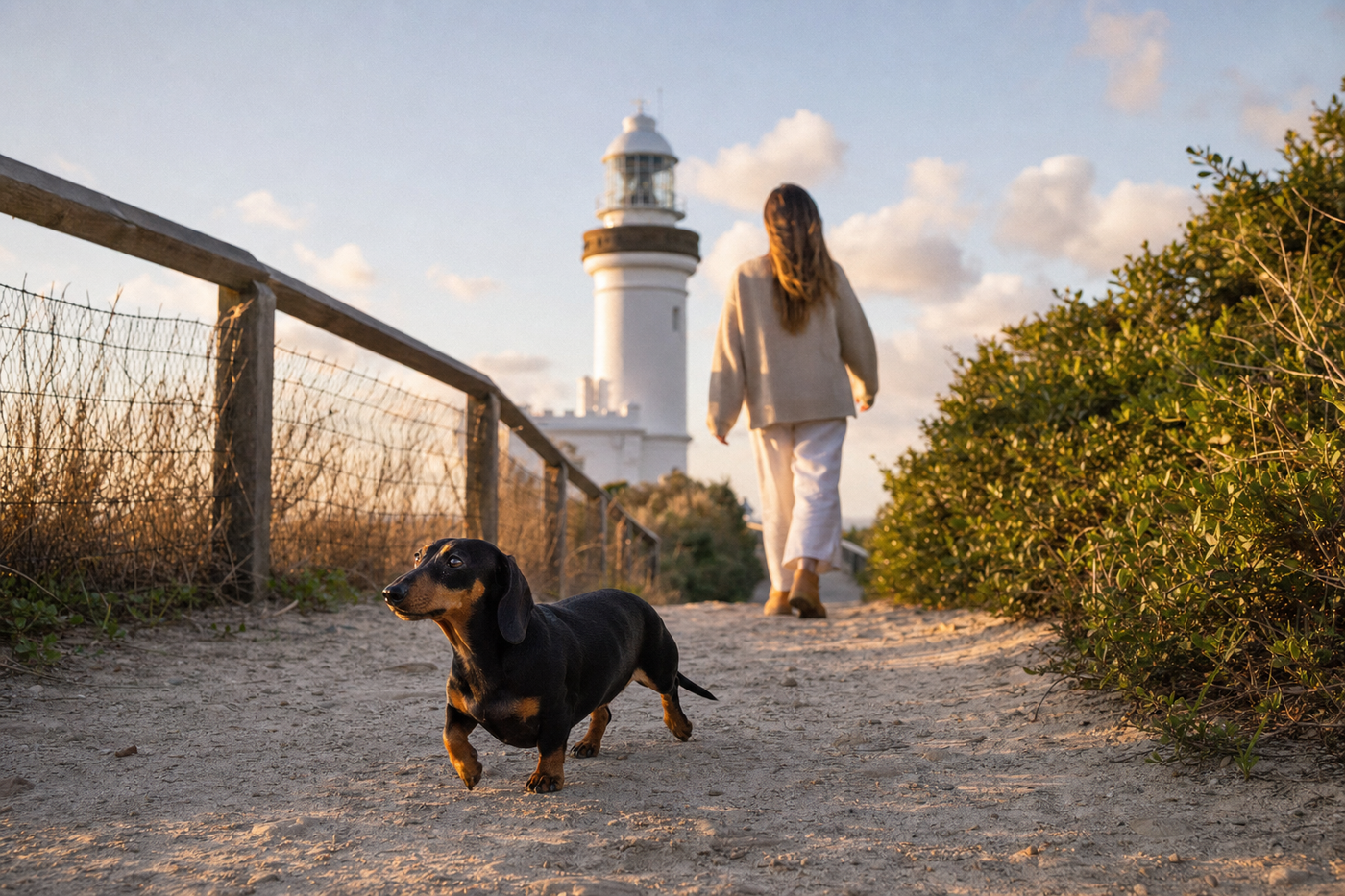
Heat stroke kills dogs within hours. Miniature dachshunds with short snouts are at high risk. Never leave them in parked cars, and watch for panting, drooling and lethargy during hot weather driving.
Interstate transport laws vary by state. Tasmania, Queensland and Western Australia have specific quarantine and documentation requirements. Check your state's agricultural department website before crossing borders.
Why miniature dachshunds are surprisingly good travel companions
Miniature dachshunds weigh between 3 and 5 kilograms, which means they fit in small spaces and rarely trigger size restrictions at pet-friendly venues. I travelled from Melbourne to Adelaide with my dachshund Oscar and realised his small frame was a genuine advantage when booking accommodation. Most pet-friendly hotels and holiday homes across Australia welcome small dogs with fewer surcharges than larger breeds.
Their stubborn personality means they bond fiercely with one person, so they stress less when that person travels with them. Oscar hated the first trip but by the time we reached the Barossa Valley, he was sleeping through entire car journeys. Short legs and stocky build make them stable passengers unlike taller, lankier breeds that struggle with car motion.
Preparing your miniature dachshund for car travel across Australia
Start with short trips of 15 to 20 minutes before attempting long drives. I made the mistake of driving Oscar four hours straight on his first trip and he vomited twice. The second time, I practised with ten 20-minute drives over three weeks, and his stomach handled the eight-hour drive to Brisbane without incident.
Condition them to their travel setup by placing their carrier or booster seat in the car for 10 minutes daily, even when stationary. Oscar learned to settle in his seat within a week when I paired it with treats. Most miniature dachshunds respond well to routine, so establish the same departure time each day if you're travelling for multiple weeks.
What we recommend
Some links below are affiliate links. Pawtrips may earn a commission at no extra cost to you.
Small dog booster car seat
A booster seat keeps your miniature dachshund secure and visible during long drives across Australia. It elevates them to window height so they can see outside, reducing motion sickness and anxiety.
Managing heat and hydration during Australian road trips
Miniature dachshunds have short snouts, which makes them prone to overheating faster than breeds with longer muzzles. On a 35-degree day driving through the Outback, I stopped every 60 to 90 minutes to give Oscar water and let him stretch. Never leave your dachshund in a parked car, even with windows cracked. The temperature inside a car reaches dangerous levels within 10 minutes on hot days.
Carry a collapsible water bowl that clips to your car's air vent or cup holder for easy access. Oscar's favourite spot became sipping water while we stopped at rest areas between Sydney and Canberra. Pack a lightweight cooling vest for days above 28 degrees, particularly if your dog is dark-coloured.
Collapsible water bowl
A portable collapsible bowl lets you provide fresh water at rest stops without carrying bulky equipment. Clip it to your car's air vent or pack it in your travel bag for quick access during hot drives.
Choosing pet-friendly accommodation that actually welcomes small dogs
Not every pet-friendly place accepts dogs equally. Many caravan parks around Cairns and the Sunshine Coast charge pet fees of 10 to 15 dollars per night, while some beachside holiday homes near Byron Bay offer free pet stays. Ring ahead and ask specific questions: can your dog access the pool area, are there fenced gardens, and do they provide food and water bowls.
I discovered that smaller family-run properties were more flexible than large hotel chains. A cottage near the Dandenong Ranges welcomed Oscar and even provided a dog bed and blankets. Check booking sites like Airbnb by filtering for pet-friendly properties, then contact owners directly to confirm their policies on small breed dogs.
Pet-friendly stays
Book accommodation that genuinely welcomes small dogs across Australia. Filter by pet policies, read reviews from other dog owners and contact hosts directly to confirm your miniature dachshund is welcome.
Flying with your miniature dachshund to Australian destinations
Most Australian airlines allow small dogs under 5 kilograms in cabin as long as you book in advance and pay a fee between 50 and 100 dollars. Qantas, Virgin Australia and Regional Express all carry small dogs, but you need approval before booking. Oscar flew to Perth with me last year and spent most of the flight sleeping in his carrier under the seat.
Arrange a health certificate from your vet dated within 10 days of departure. Interstate travel also requires proof of microchipping and vaccination records, particularly for Queensland. Arrive early on travel day to accustom your dachshund to airport sounds and processes before boarding.
Exercise routines and activities for travelling dachshunds
Miniature dachshunds need 30 to 45 minutes of exercise daily, but they tire quickly in hot weather. Instead of long walks in peak heat across Perth or Brisbane, I scheduled morning and evening walks around 7 to 8 AM and 5 to 6 PM when temperatures were manageable. Many pet-friendly parks exist near major towns: Mount Coot-tha near Brisbane and Botanic Gardens near Sydney both have designated dog areas.
Dachshunds love sniffing and exploring more than intense running, so let yours investigate new places at their own pace. Oscar spent 45 minutes investigating a single park in Adelaide because he was interested in scents and textures rather than distance covered. Pack toys and puzzle feeders for quiet time at accommodation, especially on rest days between long drives.
PitPat Dog GPS Tracker - No Subscription Needed
Track your miniature dachshund's location in real time if they escape during stops or at accommodation. No ongoing subscription fees, just one-time purchase and instant peace of mind across all Australian regions.
Health checks, vaccinations and documentation for interstate travel
Organise a pre-travel health check with your vet two weeks before departing. Ask them to check for ear infections, skin issues and dental problems that might worsen during travel stress. I wished I'd done this with Oscar before driving to Hobart, as he developed an ear infection midway that required a vet visit in Launceston.
Carry vaccination records, microchip details and a recent photo of your dachshund in case they go missing. Interstate movement also requires compliance with local quarantine laws, though this mainly affects movement from mainland Australia to Tasmania or Western Australia. Keep a small first aid kit with bandages, antiseptic, any prescribed medications and your vet's contact details for wherever you're travelling.
Dog collar and ID tag
A sturdy collar with an up-to-date ID tag is your first line of defence if your dachshund goes missing. Include your mobile number and home address so finders can contact you immediately.
Preventing anxiety and behaviour problems on the road
Dachshunds are prone to separation anxiety, and travelling amplifies this stress. Before your trip, practice leaving your dog alone in the car for short periods while parked nearby, so they learn you'll return. Oscar used to panic when I left him, but after ten practice sessions of five minutes each, he settled down.
Create a portable routine that mirrors home life: same meal times, same walk schedule and same bedtime. Bring their favourite blanket and a toy that smells like home. Some owners find calming collars or supplements helpful, though always discuss this with your vet before travel. Keep your own stress low, as dachshunds pick up on your anxiety and mirror it back to you.
Plus early access to new guides and partner deals.
No spam. Ever. Just the good stuff for you and your pet.