Restricted breeds including pit bull terriers, Japanese tosas, dogo argentinos, and fila brasileiros are completely prohibited in South Australia. If you own one of these breeds, you cannot legally travel with them into the state.
Rangers conduct random checks on dogs in public spaces, beaches, and parks. Fines for non-compliance with lead laws, missing microchips, or unpaid registration start at 200 dollars and can exceed 1,000 dollars depending on the violation.
Microchipping is non-negotiable before travelling
Your dog must be microchipped before you cross into South Australia or travel between councils within the state. The microchip is a tiny device inserted under your dog's skin, usually at the shoulder blade, and it contains your contact details. When I travelled from Victoria to Adelaide with my kelpie, the ranger at the first carpark scanned her chip as part of a routine check. This isn't just about following rules, it's genuinely the difference between getting your dog back if they bolt at a rest stop near Bordertown or losing them completely. You can get your dog microchipped at any vet clinic for around 50 to 80 dollars, and the procedure takes less than a minute.
Registration with your local council is compulsory
Every dog travelling in South Australia must be registered with the local council in the area where you're staying. Registration typically costs between 60 and 150 dollars per year depending on your council and whether your dog is desexed. You'll need proof of microchipping, vaccination records, and sometimes a photo to complete the registration. When I first travelled to Mount Barker with my border collie, I thought I could skip registration because we were only staying two weeks. The council officer at the information centre set me straight, and I had to backtrack to register before I could legally walk her in the town. Different councils have different deadlines, so ring ahead or check the website for the area you're visiting.
What we recommend
Some links below are affiliate links. Pawtrips may earn a commission at no extra cost to you.
Dog microchip and ID tag
A microchip is the single most important thing your dog needs before travelling in South Australia. Combined with an ID tag showing your contact number, these provide two layers of identification if your dog gets lost during your travels.
Lead laws vary between councils but 1.8 metres is the standard
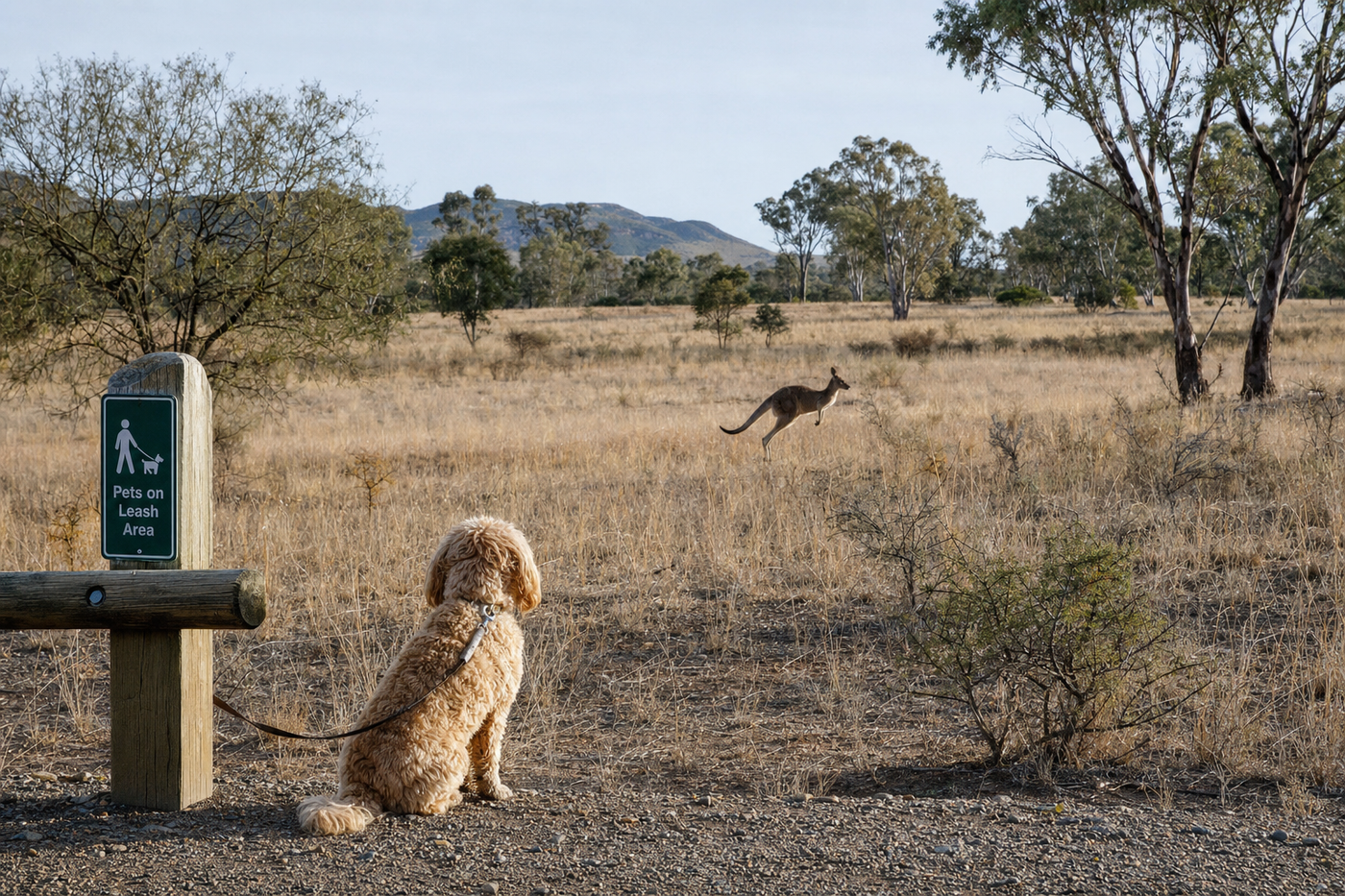
South Australian councils set their own rules about lead length in public spaces. Most councils allow leads up to 1.8 metres long, which is what I use when walking my dog in Adelaide, Barossa Valley, and the Mid North regions. Some councils are stricter and require shorter leads or off-lead restrictions in certain areas. The Adelaide city council permits off-lead walking in designated dog parks and some reserves, but leads are required on streets and near shops. When travelling between different towns, I always assume the stricter rules apply and keep my dog on the lead. Check the specific council's website for the area you're visiting, as the rules can change and enforcement varies. I've been stopped by rangers in Glenelg who checked my lead length, so it's worth getting the right equipment before you arrive.
Dog lead 1.8m compliant
A 1.8-metre lead meets South Australian council regulations across most regions. Having the right length prevents fines and ensures your dog has reasonable freedom while staying within the law in parks, streets, and public spaces.
Breed-specific legislation affects certain dog types
South Australia has restrictions on certain breeds classified as restricted or dangerous under the Dog and Cat Management Act. Pit bull terriers, Japanese tosas, dogo argentinos, and fila brasileiros are completely prohibited. Other breeds like Staffordshire bull terriers, Rottweilers, and German shepherds can be kept but require muzzles, secure enclosures, and strict handling in public spaces. I travelled with a friend who owns a Staffordshire bull terrier, and we had to carry a muzzle everywhere we went in South Australia, even though we never actually needed to use it. The rules exist regardless of how well-behaved your dog is, so you must comply. If your dog is on the restricted list, contact the local council before you travel to understand the specific requirements for your stay.
Dog muzzle for breed-specific legislation areas
If you own a restricted breed, a comfortable muzzle is mandatory in South Australia. Carrying one ensures you can access public spaces legally and protects other dogs and people you encounter during your travels.
Vehicle safety rules protect your dog during travel
Your dog must be properly restrained while travelling in a vehicle in South Australia. Dogs can travel in crates, use harnesses attached to seat belts, or be separated from the driver by a physical barrier like a cargo screen. I use a harness in the back seat because my dog gets anxious in crates during long drives. The law requires restraint partly for your dog's safety in case of sudden braking or accidents, but also because an unrestrained dog is technically a traffic hazard. I learned this the hard way when a ranger pulled me over near Mount Gambier and explained that an unrestrained dog counts as driving without due care. Check your vehicle's specifications and invest in proper restraint equipment before you start your trip.
PAW by Blackmores Complete Calm Multivitamins for Dogs
Long car journeys and unfamiliar environments can stress dogs. These multivitamins support calm behaviour during travel, helping your dog settle in new locations across South Australia without the side effects of stronger sedatives.
Off-lead areas and dog parks have specific rules
Many towns across South Australia have designated off-lead dog parks and exercise areas where your dog can run freely without a lead. Adelaide has numerous parks including Coromandel Valley Dog Park and Morialta Reserve with off-lead areas, while regional towns like Barossa also provide designated spaces. You can usually find these on the council website or by asking at the local information centre. The important thing is that off-lead areas are not free-for-all zones. Your dog must still respond to recall commands, cannot approach other dogs without permission, and you're responsible for any incidents. When I travelled to Stirling in the Adelaide Hills, I found a quiet off-lead reserve near the playground and spent an hour letting my dog burn energy before continuing our journey.
Beaches and public spaces have seasonal restrictions
Many South Australian beaches restrict dogs during summer months to protect nesting areas and other beach users. Glenelg Beach allows dogs off-lead before 9 AM and after 5 PM from November to March, but dogs are banned entirely from September to October during turtle nesting season. Other beaches like Henley Beach have different rules again, with leads required year-round in some sections. I made the mistake of arriving at Port Elliot Beach in December with my dog expecting it to be dog-friendly, only to find out dogs weren't permitted during those months. The rules change based on season, nesting periods, and water conditions, so always check the specific beach's current restrictions before you visit. Most councils publish these restrictions on their websites, and the information changes annually.
Pet-friendly stays compliant with local laws
Finding accommodation that allows dogs and understands South Australian pet laws makes travel easier. These pet-friendly properties are vetted to ensure they meet local council requirements and provide safe spaces for your dog during your stay.
Vaccination and health records must travel with you
Your dog must be up to date with vaccinations, particularly rabies if you've travelled interstate. South Australia recognises vaccination records from other Australian states, but you'll need proof. I keep digital copies of my dog's vaccination certificate, microchip details, and council registration papers on my phone so I can show them to any ranger who asks. You'll also need a current flea and tick treatment record if you're staying in certain regions, especially if you're travelling to wine regions where there are wildlife reserves. Vets in South Australia can issue local vaccination certificates if your dog's records are out of date, but this takes time and costs money. Before you leave your home state, get a certified copy of all health records and keep them accessible throughout your trip.
Plus early access to new guides and partner deals.
No spam. Ever. Just the good stuff for you and your pet.