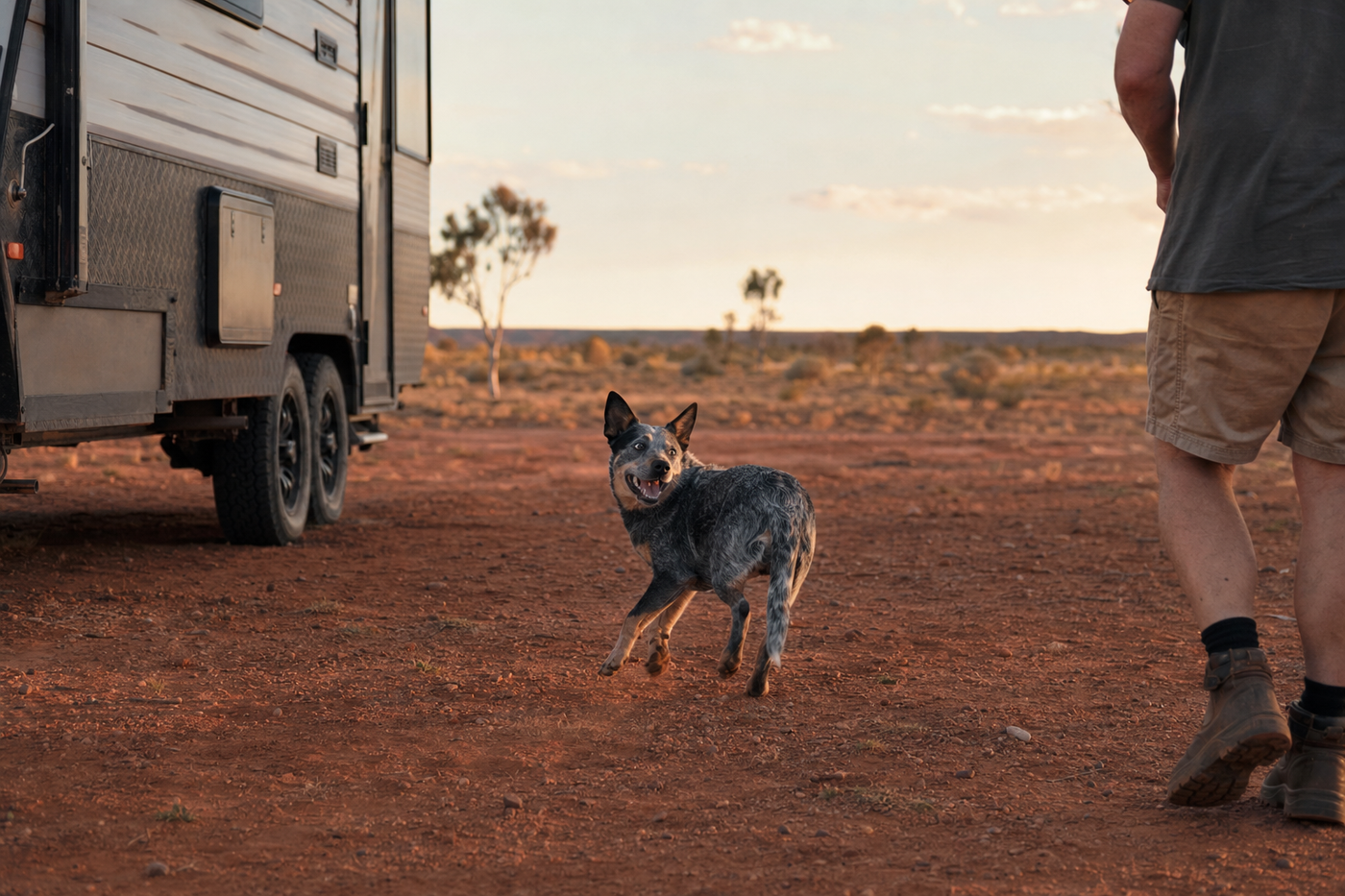
Northern Territory heat kills pets rapidly. Never leave a dog or cat in a vehicle, even with windows open. Temperatures inside a parked car exceed 50 degrees Celsius on warm days.
Dangerous dog breed muzzles must be worn in public spaces at all times if your dog is restricted. Failure to comply results in significant fines and potential confiscation of your pet.
Why the Northern Territory has strict pet entry rules
The Northern Territory sits isolated from mainland Australia, and the NT government takes animal biosecurity seriously. They want to keep disease out, particularly rabies and other exotic animal illnesses that could devastate local wildlife and domestic animals. When I drove up to Darwin with my border collie last year, I learned the hard way that these rules exist for good reason.
The NT also deals with unique environmental challenges. The heat can kill an unprepared pet in hours, and the wildlife includes snakes, crocodiles, and spiders that pose genuine risks to dogs and cats. The laws reflect these real dangers, not bureaucratic red tape. Understanding what you face before you arrive means you can pack properly and keep your animal safe.
Microchip and identification requirements
Every dog entering the Northern Territory must have a functioning microchip registered with the NT National Pet Register. This needs to be in place before you cross the border. The microchip should be ISO 11784 or 11785 compliant, the standard Australian format. When the vet scans it at the border checkpoint, they need to see your dog's details registered in the system immediately.
You also need to carry proof of the microchip number and registration details in your travel documents. A simple printout from the registry works fine. Your cat doesn't need a microchip by law, but vets strongly recommend one anyway. I put one in my dog's neck the week before our trip and registered it online in about ten minutes. It cost me 65 dollars at the clinic, but it's non-negotiable for entry.
Vaccination and health certificate requirements
Your dog must have received a rabies vaccination within the 12 months before you enter the NT. The certificate from your vet needs to state the vaccine name, date administered, and the next due date. You cannot cross the border without this document. If your dog's rabies jab is due while you are travelling, you need to get it done in an NT veterinary clinic before the due date passes.
You also need a health certificate issued by a veterinarian within 10 days of your travel date. This certificate states that your pet is healthy and free of signs of infectious disease. The vet will perform a basic examination and sign off on the paperwork. This costs between 50 and 100 dollars depending on your vet. Cats need the same health certificate but rabies vaccination is recommended rather than required. Get these sorted before you leave your home state.
What we recommend
Some links below are affiliate links. Pawtrips may earn a commission at no extra cost to you.
Dog microchip and ID tag
A microchip is the legal requirement for entry to the Northern Territory and your dog's best chance of being reunited with you if lost in a remote area. An ID tag with your current contact number provides immediate identification without needing a scanner. Both together give your pet maximum protection.
Transport and containment laws while driving
Once you are in the NT, your dog cannot roam free in your vehicle. The law requires dogs to be restrained by a harness, carrier, or barrier that prevents them from moving around the car while you drive. I learned this when a police officer pulled me over near Katherine because my dog was sitting in the front seat. The fine is around 160 dollars, and it is genuinely a safety issue when you are driving at 100 kilometres per hour on the Stuart Highway.
If you are staying in one place for a few days, your dog cannot be left alone in a parked vehicle in the NT heat. Even with windows cracked open, a car reaches lethal temperatures within 15 to 20 minutes. I left my dog in an air-conditioned motel room with water instead. Never leave a pet unattended in a vehicle, full stop. The NT is hotter than you think, and the consequences are permanent.
Dog lead 1.8m compliant
Northern Territory law restricts dogs to leads no longer than 1.8 metres in public spaces. A quality leather or rope lead of this length keeps your dog close while you explore towns and national parks safely. This length is sufficient for adequate exercise and control.
Breed-specific legislation in the Northern Territory
The Northern Territory has declared certain dog breeds or types as dangerous. These include American pit bull terriers, Staffordshire bull terriers, and several others. If your dog falls into one of these categories, you face strict rules. Your dog must wear a muzzle in public, be kept on a lead no longer than 1.8 metres, and be contained in a securely fenced yard at home. The rules apply across the entire territory.
You need to register your dog as a dangerous dog with the local council in the area where you are staying. This costs money and requires proof of third-party liability insurance. If you own one of these breeds, contact the NT council office where you plan to stay at least two weeks before arrival. Some pet-friendly accommodation will refuse to accept dangerous breed dogs regardless of the rules. Check with your accommodation provider before you book.
Dog muzzle for breed-specific legislation areas
If you own a restricted breed in the Northern Territory, a comfortable muzzle is legally required for public outings. A well-fitted muzzle allows your dog to breathe, drink, and pant naturally while keeping you within the law. Choose one designed for extended wear during outdoor activities.
Local council registration when you arrive
Every dog must be registered with the local council in the NT council area where it resides. If you are staying in Darwin, you register with Darwin City Council. If you are staying in Alice Springs, you register with Alice Springs council. If you are just passing through for a week, you technically do not need to register. However, if you are staying longer than 30 days, registration becomes mandatory.
Registration costs around 80 to 150 dollars depending on the council and whether your dog is desexed. You will need your dog's microchip number, vaccination records, and sometimes a completed form. Most councils allow you to register online or by post. I registered my dog while I was in Darwin and the whole process took about a week. The registration lasts for one year and you get a collar tag in return. This tag is proof of registration if you get stopped by a ranger.
Personalised dog collar with contact number
A collar with your current mobile number engraved provides instant contact information if your dog is found in the NT. This is your first line of defence if your dog escapes or gets lost before a scanner locates the microchip. Choose a durable collar designed for hot climates.
Quarantine rules and import permits
Unlike some Australian states, the Northern Territory does not impose a strict quarantine period for dogs and cats coming from other Australian states. However, you do need an import permit if you are moving permanently or staying for an extended period. This permit is issued by NT Parks and Wildlife and costs around 40 to 60 dollars. You apply online and submit your pet's health certificate and microchip details.
If your dog shows any signs of illness when you arrive, you may face temporary isolation and vet inspections at your expense. This is rare but it happens. I kept my dog inside our accommodation for the first 48 hours to observe for any stress-related symptoms. The border checkpoints are occasional rather than permanent, so you might not encounter an official inspection. However, you must have all documents ready in case you are stopped. Keep copies of everything in your vehicle.
What to do if your pet is sick or injured in the NT
If your dog or cat becomes sick while you are in the Northern Territory, take them to an emergency veterinary clinic immediately. Major towns like Darwin and Alice Springs have 24-hour animal hospitals. Smaller towns like Katherine and Tennant Creek have standard clinics with emergency services available during business hours. Vet treatment is expensive in remote areas, sometimes 30 to 50 percent more costly than southern cities.
Make sure your pet travel insurance covers emergency vet bills in the NT before you leave home. Some policies have exclusions for travel to remote areas. I got comprehensive pet insurance before my trip and it saved me over 800 dollars when my dog developed an ear infection in Alice Springs. Get contact details for the nearest vet clinic for every town where you plan to stop. Write them down or save them in your phone. Your pet's life depends on quick access to professional care.
Plus early access to new guides and partner deals.
No spam. Ever. Just the good stuff for you and your pet.