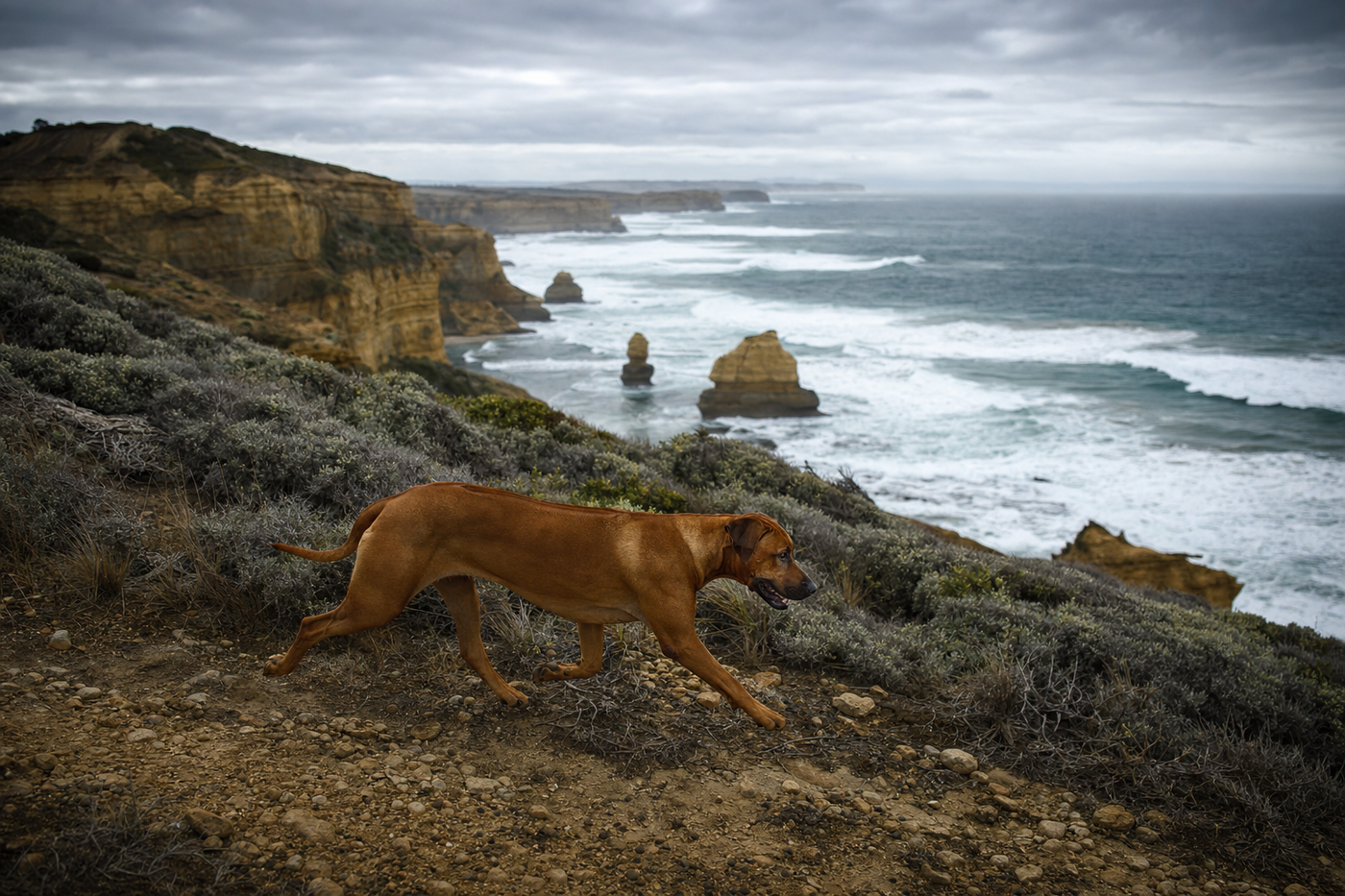
Heatstroke can be fatal. Signs include excessive panting, drooling, weakness, or collapse. If your dog shows these symptoms, cool him with water immediately and drive to the nearest vet without delay.
Tick-borne paralysis is common in eastern Australia and can cause temporary or permanent paralysis. Check your dog's entire body daily, especially behind ears and between toes. Remove ticks correctly by grasping near the head and pulling straight out.
Why Rhodesian Ridgebacks Need Special Travel Consideration
Rhodesian Ridgebacks are large, muscular dogs bred for hunting in African heat, and they weigh between 30 and 36 kilograms. Your Ridgeback will be your travel companion for 10 to 12 years, so getting the travel routine right early matters. These dogs have short coats that offer minimal sun protection, and their dark colouring absorbs heat quickly. I learned the hard way that taking my Ridgeback on a four hour drive from Sydney to the Central Coast in mid-afternoon resulted in him overheating by Gosford. Your dog needs a strategy tailored to their breed before you book any trip.
Managing Heat on Long Journeys
Heat is the biggest threat to your Ridgeback's safety when travelling. The interior of a car can reach 50 degrees Celsius within 20 minutes on a warm day, even with windows cracked open. Plan all travel for early mornings before 9 AM or after 5 PM, especially during summer months from December to February. Stop every 90 minutes at rest stops or parks where your dog can drink fresh water, walk around, and cool down in the shade. Pack a portable water bowl that collapses flat, and bring ice packs wrapped in a towel that your dog can lie against during stops. Never leave your Ridgeback unattended in a car, even for five minutes. When you reach your destination, check paws and ears for heat damage, and provide cool water immediately.
Choosing Pet-Friendly Accommodation Across Australia
Most standard hotels won't accept large dogs, but pet-friendly chains and holiday homes will. I've used Airbnb properties and standalone cottages across regional Australia with success, paying between 80 and 150 dollars extra per night for pet fees. Check each listing's pet policy carefully: some allow dogs only in certain rooms, others charge per dog, and some have size restrictions that your 35 kilogram Ridgeback might exceed. Call ahead to confirm your dog's size is acceptable. Coastal towns like Byron Bay, Coffs Harbour, and Margaret River in Western Australia have numerous dog-friendly rental homes. Regional accommodation near hiking trails or beaches works best because your Ridgeback will need substantial exercise daily. Bring your own dog bed so your dog has familiar bedding and doesn't damage furniture.
What we recommend
Some links below are affiliate links. Pawtrips may earn a commission at no extra cost to you.
PitPat Dog GPS Tracker - No Subscription Needed
This GPS tracker lets you monitor your Ridgeback's location in real-time across Australia without ongoing subscription costs. It's essential insurance when travelling in unfamiliar areas where your dog might escape during rest stops or at accommodation.
Daily Exercise and Activity Needs on the Road
A Rhodesian Ridgeback requires at least 60 minutes of vigorous exercise daily, and travel shouldn't change that routine. I made the mistake of assuming my dog would relax and enjoy sightseeing, but he became restless and destructive after just two days without proper activity. Book accommodation near beaches, national parks, or open fields where your dog can run freely. The Blue Mountains near Sydney offer excellent walking trails at Katoomba and Leura where your dog can explore off-leash areas. Beaches at Jervis Bay and the South Coast of New South Wales allow dogs before 10 AM and after 4 PM during peak season. Your Ridgeback's hunting instinct is strong, so always keep one eye on him around wildlife like rabbits and wallabies. A tired dog is a well-behaved travel companion, so don't skip exercise even when you're busy exploring.
Kurgo Dog Food Travel Bag: Kibble Carrier, 5 Pound
This bag keeps your Ridgeback's kibble fresh and organised during road trips across Australia. It stores enough food for several days and prevents spills that damage your car interior on bumpy regional roads.
Protecting Your Ridgeback from Parasites and Pests
Australia's ticks, fleas, and mosquitoes are aggressive, and your Ridgeback's short coat offers minimal protection. Book a flea and tick treatment before you travel, or apply a prescription collar that lasts up to eight months. I discovered a tick behind my dog's ear after a walk through bushland near Ku-ring-gai Chase National Park in Sydney, and the vet visit cost 120 dollars. Brush your dog's coat every evening to spot ticks early. Mosquitoes in tropical regions like the Gold Coast and Cairns can carry dangerous diseases, so plan outdoor activities during cooler hours when insect activity drops. Carry tweezers to remove ticks correctly: grasp near the head and pull straight out, then clean the area with antiseptic. Your vet should advise on heartworm prevention, which is essential in warm regions across Australia.
Seresto Flea & Tick Collar for Large Dogs Over 8kgs
This collar provides eight months of continuous flea and tick protection, ideal for Ridgebacks travelling across Australia's tick and mosquito zones. Apply it before your trip to ensure your dog stays protected throughout your journey.
Car Travel Setup and Safety Precautions
Your Ridgeback needs restraint in the car to stay safe during sudden stops or accidents. Use a crash-tested harness attached to the seat belt, or install a divider that separates your dog from the cabin. Loose dogs cause accidents: I saw a large dog slide across the back seat and distract the driver during emergency braking on the Princes Highway. Never transport your dog in an open tray or in the boot without ventilation. Use an XL seat cover to protect your upholstery from mud, sand, and shedding. Keep the car cool with air conditioning, and never close windows completely without ventilation. Bring a portable crate as backup if you need to leave your dog safely in a motel room while you eat dinner. Stop every two hours to allow your dog to relieve himself and stretch. A microchip and ID collar are essential in case your dog escapes during a rest stop.
XL dog seat cover
A durable seat cover protects your car interior from your Ridgeback's mud, sand, and shedding during long drives across Australia. It's easily washable and makes clean-up after beach or bush trips much simpler.
Packing the Right Gear for Multi-Day Trips
Pack a travel bag with your dog's regular kibble, treats, medications, and a portable food and water bowl. Sudden diet changes can cause digestive upset, so bring enough of your dog's usual food for the entire trip. Include a first aid kit with bandages, antiseptic cream, and tweezers for tick removal. Bring recent photos of your dog in case he escapes, plus your vet's contact details and your dog's microchip number written down. Pack a lightweight travel bed that your dog recognises, which helps him settle in unfamiliar rooms. Include a collar, lead, waste bags, and grooming supplies like a brush and nail clippers. I also carry a small record book with my dog's vaccination dates and flea treatment history, which vets ask for if emergencies arise. Regional vets in towns like Bathurst or Tamworth may have waiting lists, so identify the nearest vet to your accommodation before you arrive.
Dog collar and ID tag
A sturdy collar with an engraved ID tag is your first line of defence if your Ridgeback escapes during travel. Include your mobile number and home postcode so locals can contact you immediately if your dog goes missing.
Regional Travel Tips for Different Australian Climates
Coastal regions and mountain areas are safer than inland deserts for Ridgeback travel. The South Coast of New South Wales stays cooler during summer, and beaches at Mollymook and Ulladulla offer morning and evening swimming. Tasmania offers the coolest climate year-round and has excellent pet-friendly accommodation, though the six to ten hour journey from Melbourne requires planning. Avoid the Outback, Northern Territory, and inland Queensland during summer, as temperatures regularly exceed 40 degrees Celsius. If you travel to cooler regions like the Victorian Alps or Snowy Mountains near Thredbo, your dog will be more comfortable hiking in winter. Tropical regions like the Gold Coast are best visited during autumn and winter months from April to September. Your Ridgeback's short coat provides no insulation in cold climates, so bring a dog jumper if you travel to Tasmania or mountain regions during winter.
Plus early access to new guides and partner deals.
No spam. Ever. Just the good stuff for you and your pet.