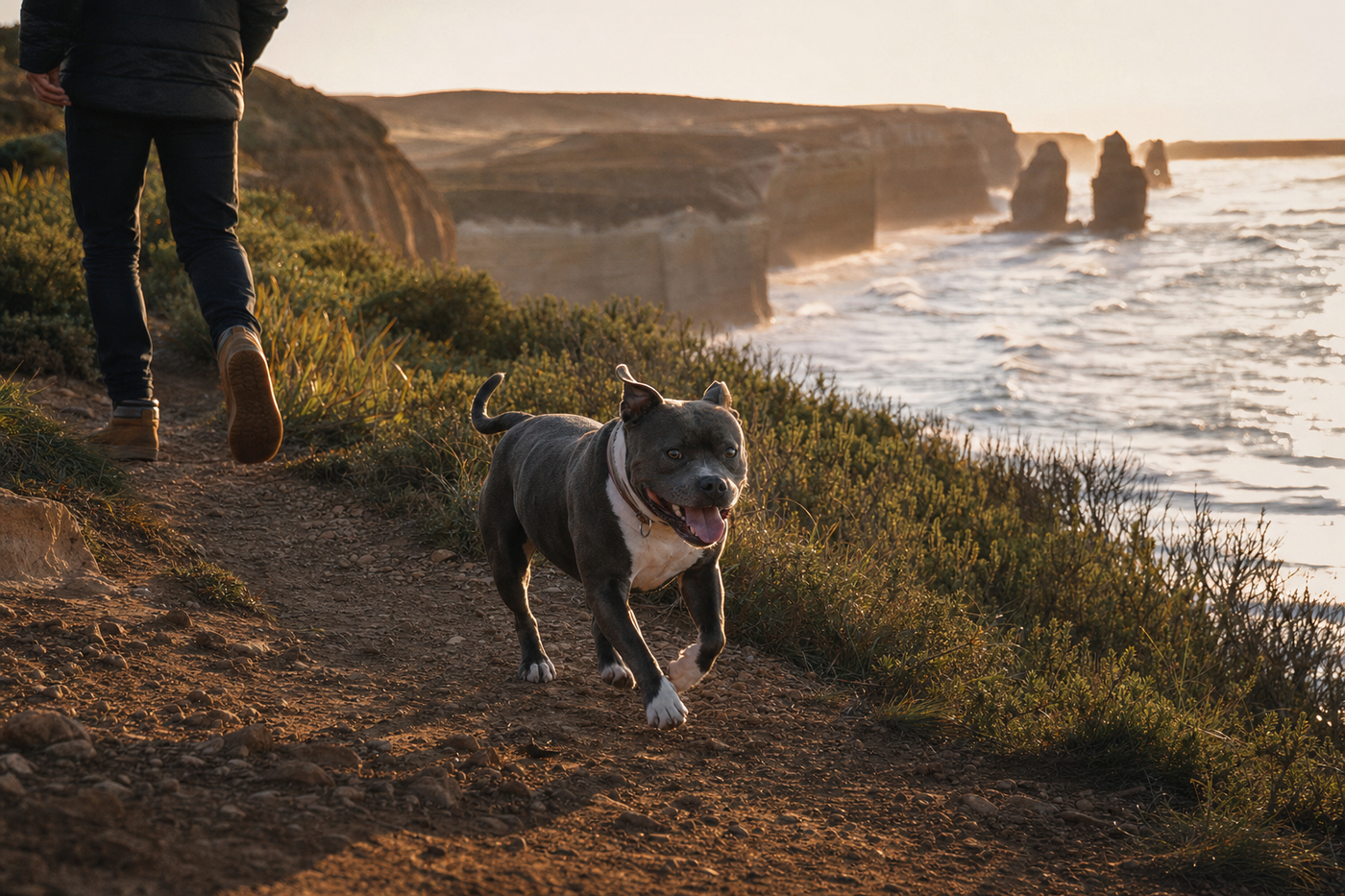
Heat stress kills dogs quickly in Australian cars. Never leave your Staffy in a parked vehicle in temperatures above 20 degrees Celsius, even briefly. Bring extra water and offer breaks every two hours on hot days.
Some rural areas and remote locations have limited or no veterinary services within 100 kilometres. Plan your route to avoid being stranded far from emergency vet care, particularly in tropical regions where tick-borne diseases require immediate treatment.
Why Staffordshire Bull Terriers Make Good Travel Companions
Staffordshire Bull Terriers are compact, muscular dogs that weigh between 11 and 17 kilograms, making them easier to manage in cars and accommodation than larger breeds. They're loyal to their owners and generally enjoy new experiences when properly socialised. I've travelled with a Staffy from Brisbane to Melbourne and found their adaptable nature helpful when moving between different environments.
Their short coat means they don't shed as heavily as longer-haired breeds, which keeps your car cleaner during long drives. Staffies bond intensely with their owners, so they actually travel better knowing you're with them rather than being left behind. The main challenge isn't their size or temperament, it's working around the breed restrictions and misconceptions you'll encounter at some venues across Australia.
Understanding Breed Restrictions Before You Travel
Before booking your trip, research which states and territories have restrictions on Staffordshire Bull Terriers. New South Wales and Victoria classify them as restricted dogs, which means certain accommodation providers won't accept them regardless of your dog's individual behaviour. Queensland has fewer restrictions, but it's worth calling ahead to specific accommodation venues rather than assuming they're Staffy-friendly.
Some councils in regional areas are stricter than others. When I drove through regional Victoria with my Staffy, a few caravan parks turned us away outright, even though my dog had never been aggressive. Contact the local council or accommodation directly and ask about their policy rather than relying on outdated websites. Having documentation of your dog's temperament and training can sometimes help, though it won't change blanket breed policies at certain venues.
Preparing Your Staffy for Car Travel
Start with short trips around your local area before attempting a long journey. My Staffy got carsick on the first 30-minute drive, but after five shorter trips, she settled in fine. Introduce the car gradually so your dog associates it with positive experiences, not just trips to the vet.
Use a proper restraint system such as a harness, crate, or car seat designed for dogs around 15 kilograms. Never let your Staffy roam freely in the car, as sudden braking or swerving could injure them or distract you. Ensure good ventilation, especially on warm days. Keep the car temperature below 22 degrees Celsius on hot days, and never leave your dog unattended in a parked car, even with windows down.
What we recommend
Some links below are affiliate links. Pawtrips may earn a commission at no extra cost to you.
PitPat Dog GPS Tracker - No Subscription Needed
A GPS tracker gives you peace of mind when travelling through unfamiliar areas. If your Staffy escapes at a rest stop or new accommodation, you can locate them immediately. The no-subscription model means you're not paying ongoing costs during your trip.
Finding Pet-Friendly Accommodation Across Australia
Pet-friendly accommodation in Australia ranges from caravan parks to holiday apartments, but availability varies by region. Popular destinations like Byron Bay, Margaret River in Western Australia, and the Daintree Rainforest region in Far North Queensland have more options than remote outback areas. Always call ahead, as some places advertise as pet-friendly but charge extra fees or have limited pet rooms that book out quickly.
Expect to pay between 15 and 35 dollars extra per night for a pet-friendly room. Some venues require a damage bond, typically between 50 and 100 dollars, which you'll get back if there's no damage. When you arrive, ask about nearby parks and off-leash areas so your Staffy can burn energy. Many caravan parks have designated dog exercise areas, which is helpful after a long day of driving.
Pet-Friendly Stays
Browse and book accommodation across Australia that genuinely welcomes dogs. This platform specialises in filtering by pet policies, helping you avoid the hassle of phoning places individually to check if they accept Staffordshire Bull Terriers.
Managing Exercise and Behaviour on the Road
Staffordshire Bull Terriers need at least 60 minutes of exercise daily, even when travelling. I've found that splitting this into two 30-minute sessions works well: one walk before breakfast and one after arriving at your accommodation. Without adequate exercise, your Staffy may develop anxiety or destructive habits in unfamiliar accommodation.
Use a long lead or find secure off-leash areas where your dog can run safely. Many regional towns have dog parks or designated dog beaches. Check local council websites for off-leash zones before you arrive at each location. Remember that your Staffy is used to familiar territory, so keeping them on lead in new areas is sensible until they're confident. Keep training consistent by using the same commands and reward system you use at home.
Kurgo Dog Food Travel Bag: Kibble Carrier, 5 Pound
This bag keeps your Staffy's food fresh and organised during long drives. Five-pound capacity covers several days of kibble, and the waterproof lining prevents spills in your car. Much easier than carrying loose bags of food that take up space.
Health and Safety Considerations for Interstate Travel
Before crossing state borders, ensure your dog's vaccinations are current and carry a copy of their vaccination certificate. Some states require specific documentation, particularly for travelling to or from Tasmania. Your vet should provide health certificates if you're flying or travelling for extended periods.
Flea and tick prevention is crucial in Australia, particularly in tropical regions like North Queensland where parasites thrive year-round. Apply treatments before you travel and maintain your regular schedule regardless of location. Pack a basic first aid kit including bandages, antiseptic, and antihistamine. Keep your vet's contact details for your home area and research veterinary clinics along your planned route. Microchip your dog before travelling and register them with the relevant state authority. If your Staffy goes missing, a microchip combined with updated contact details gives you the best chance of recovery.
Seresto Flea & Tick Collar for Large Dogs Over 8kgs
Staffordshire Bull Terriers travelling through different climates face varied parasite exposure. This collar provides continuous protection for up to eight months without monthly applications, ideal for road trips across Australia where tick density varies by region.
Managing Food and Water While Travelling
Stick to your Staffy's regular food brand and feeding schedule to prevent digestive upset. Changes in water sources alone can sometimes cause loose stools, so having familiar meals helps. Pack enough food for your journey plus a few extra days in case you get delayed or can't find your brand locally.
Offer water frequently, at least every two hours during driving and whenever you stop for breaks. Use a collapsible bowl that fits in your bag, making it easy to provide water at rest stops. Some dogs drink less when travelling due to stress or unfamiliar surroundings, so monitor their intake. At accommodation, ask where the nearest pet supply shop is in case you run low on food unexpectedly. Keep your dog's feeding routine as normal as possible, which often helps them settle into new environments.
Building Confidence in Unfamiliar Spaces
Your Staffy may feel anxious in new accommodation, particularly if they're used to a familiar home. Bring their own bedding or a blanket that smells like home, as this helps them relax. Set up their sleeping area in a quiet corner away from doors and windows where they can feel secure.
Stay calm and matter-of-fact about the new environment, as dogs pick up on your anxiety. If your Staffy seems nervous, don't over-comfort them, as this reinforces the anxiety. Instead, keep your routine consistent: same meal times, same walk times, same playtimes. After a few days in one location, most Staffies settle significantly. If your dog struggles with separation anxiety during the trip, having a crate they're already familiar with can help create a safe space when you need to leave them briefly.
Plus early access to new guides and partner deals.
No spam. Ever. Just the good stuff for you and your pet.