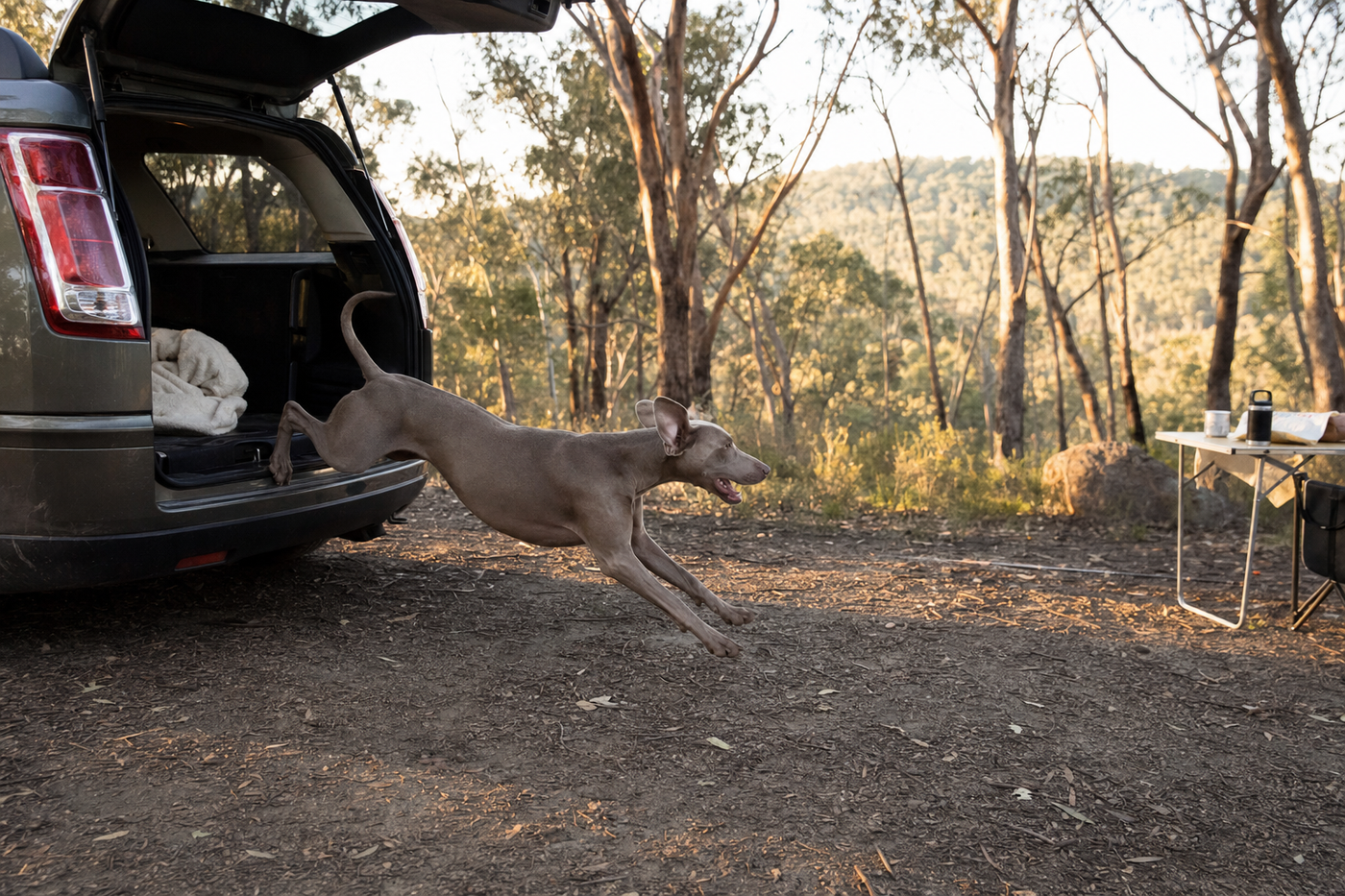
Vehicle interiors heat to dangerous levels within 15 minutes on warm Australian days. Never leave your large dog unattended in a car, and watch for signs of heat stress including excessive panting, drooling, and lethargy.
Some large breed dogs can experience motion sickness or severe anxiety during long car journeys. Consult your vet before travelling to identify potential health or behavioural issues that need management.
Why Large Dogs Need Special Travel Arrangements
Large breed dogs take up serious space in a car, and they need different safety considerations than smaller pets. A German Shepherd or Great Dane can weigh between 30 and 50 kilograms, which means they're a safety hazard if they're loose during emergency braking or a collision. I learnt this the hard way when my 45-kilogram Labrador slid across the back seat during a sudden stop near Canberra and injured his hip.
Large dogs also struggle with heat more than small breeds because of their size and body mass. They can't cool down as quickly, and a car interior heats up dangerously fast, even on mild days. Your big dog needs proper ventilation, frequent breaks, and access to water throughout the journey.
Accommodation gets trickier too. Most pet-friendly places in Australia welcome small dogs but hesitate with large breeds because of property damage concerns. Finding places that genuinely accommodate a 40-kilogram dog takes planning and research ahead of time, not last minute phone calls.
Securing Large Dogs in Vehicles: Barriers vs. Harnesses
You have two main options for keeping a large dog safe in the car: a sturdy barrier between the back seat and cargo area, or a heavy-duty harness that clips to the seatbelt. Both work, and your choice depends on your vehicle type and how your dog behaves during drives.
Barriers are metal or plastic screens that fit behind the front seats or between the rear cargo area and the cabin. They stop your dog from moving forward during sudden stops and keep them out of the driver's view. I fitted a metal barrier in my 2012 Toyota Landcruiser and it cost around AU$250 to AU$400 installed. The barrier absorbs impact energy and protects both the dog and your vehicle interior from damage.
Harnesses clip a large dog to the existing seatbelt and keep them secured in one spot. These work better if your dog is calm and you need flexible access to the back seat. Look for harnesses rated for dogs over 30 kilograms and test them before a long trip. Some dogs hate being strapped down, so watch how your dog reacts during a short drive first.
Never place a large dog in the boot or cargo area without proper ventilation, as airflow back there is often inadequate. Dogs can overheat quickly in enclosed spaces, even with windows cracked open.
What we recommend
Some links below are affiliate links. Pawtrips may earn a commission at no extra cost to you.

Quiet 62L Pet Dryer Box with Smart Control
This ensures your pet stays comfortable and dry during your travels.

Dog Ear Muffs for Noise Protection
These ear muffs help keep your pet calm in noisy environments during travel.

Reduce Shedding with FURminator Conditioner
A well-groomed coat means less mess in your travel space.

Calming Pheromone Collar for Anxious Dogs
Ideal for easing your dog's anxiety while travelling.
Temperature Control and Ventilation Solutions
Australian heat kills dogs in cars faster than most people realise. A car parked in 28-degree sunshine can reach 50 degrees Celsius inside within 15 minutes. Your large breed dog cannot handle that, especially breeds like Rottweilers, Bernese Mountain Dogs, or St. Bernards that have thick coats.
Invest in a quality car shade or sunshade that covers rear windows. These reflective screens reduce heat penetration and cost between AU$30 and AU$80. Pair this with window vents that keep air flowing through the cabin even when parked. Some dog owners install battery-powered fans in their cargo areas, though these need reliable power sources.
During drives, crack windows for cross ventilation but not wide enough for your dog to jump out. Air conditioning is non-negotiable on long journeys over 2 hours, especially between November and March when Australian summers are hottest. Check your dog's breathing and drool levels, as excessive panting means they're overheating. Stop immediately and let them cool down in a shaded area with water.
Avoid driving during peak heat hours, typically 11 am to 4 pm. Plan journeys early in the morning or late afternoon when temperatures are cooler. This approach saves your dog from heat stress and makes the trip more pleasant for everyone.
Finding Pet-Friendly Accommodation That Accepts Large Dogs
Booking accommodation for a large dog requires honesty upfront about size and breed. Many Australian holiday parks and motels claim to accept pets but have maximum weight limits of 10 or 15 kilograms, which excludes most large breeds. I've driven three hours to a place only to be turned away because my 35-kilogram dog was 10 kilograms over their limit.
Call accommodation providers directly rather than trusting online descriptions. Ask specific questions: What is the maximum dog weight they allow. Are there breed restrictions. Do they charge pet fees, and how much. What's their cancellation policy if your dog causes damage. Some places charge AU$20 per night for pets, while others ask for a bond of AU$100 to AU$200.
Pet-friendly holiday houses on platforms like Stayz are often better than hotels for large dogs because they offer more space, fenced yards, and fewer noise complaints from neighbouring guests. Expect to pay extra for pet-friendly houses, typically AU$30 to AU$50 more per night. Book these in advance, especially during school holidays and long weekends when availability drops dramatically.
Caravan parks with large sites and grass areas work well for big dogs. Many regional parks across New South Wales, Victoria, and South Australia welcome large dogs, though always confirm before booking. Check reviews from other dog owners to see if the park actually welcomes pets or just tolerates them.
Preparing Your Large Dog for Extended Car Travel
Dogs don't naturally enjoy long car rides, especially large breeds that feel confined in vehicles. Start with short drives around your neighbourhood to build positive associations. Reward your dog with treats and praise after every short trip, gradually extending the duration over several weeks. This conditioning helps reduce anxiety when the real journey begins.
Exercise your dog thoroughly before leaving home. A tired dog settles down faster and causes fewer disruptions during the drive. Take your large dog for a 45-minute walk or play session before departure, then allow them to toilet before getting in the car. A dog that's had physical activity will sleep through much of the journey rather than pacing and whining.
Pack familiar items from home: their own bed or blanket, favourite toys, and enough of their regular food for the entire trip. Changing diet during travel can cause digestive upset, which leads to vomiting or diarrhoea in the car. Bring their water bowl and refill it at stops, or use collapsible travel bowls that take up minimal space.
Consider motion sickness medication from your vet if your large dog has a history of car sickness. Some dogs genuinely suffer from nausea on long drives, and a vet can prescribe mild medication to prevent vomiting. Always administer medication as directed and test it on a short drive before a long journey.
Essential Stops and Break Frequency on Australian Roads
Large dogs need toilet breaks more frequently than small breeds simply because they have larger bladders but similar bathroom urgency. Plan to stop every 2 to 3 hours on long drives, which aligns well with driver fatigue recommendations anyway. On a 6-hour drive from Melbourne to Adelaide, you'd stop at least twice specifically for your dog.
Rest areas along major highways often have grassy verges where your dog can toilet safely. The Hume Highway between Sydney and Melbourne has designated rest stops at Marulan and Gundagai, both offering space for dogs to stretch. The Princes Highway toward South Australia has similar facilities. Always use a lead when letting your dog out at rest stops, even if they're well-trained, as unfamiliar noise and activity can spook them.
Bring collapsible water bowls to offer water at every stop, especially in warm weather. Your large dog needs regular hydration on long drives, more than they'd normally drink at home. Some dogs develop dehydration quickly, indicated by sticky gums and excessive panting. Keep water available and offer it even if your dog doesn't ask.
Factor extra time into your journey schedule. What would take 5 hours with a human passenger might take 6 or 7 hours with a large dog needing multiple breaks. Rushing creates stress for both you and your dog, so leave early and arrive relaxed. Your dog will settle better at accommodation if the journey wasn't stressful and hurried.
Managing Behaviour and Anxiety During Long Journeys
Nervous large dogs can cause real problems in a confined car space. An anxious 50-kilogram dog thrashing around is dangerous for everyone, so address anxiety before the trip starts. Talk to your vet about anxiety signs: panting, pacing, whining, drooling, or attempts to escape. Some dogs respond well to calming supplements containing L-theanine or chamomile, available from pet stores and vets across Australia.
Create a calm environment in the car by playing soft music or leaving the radio off entirely. Some dogs settle with white noise like audiobooks or podcasts, but others prefer silence. Experiment during short practice drives to find what works for your dog. Keep the car temperature comfortable and avoid sudden movements or aggressive driving that might startle them.
If your dog has severe travel anxiety, your vet might prescribe low-dose sedation for long journeys. This is legitimate medical management, not just convenience, and helps dogs with genuine anxiety travel safely. Sedation prevents stress-related behaviours and allows your dog to rest rather than panic for hours.
Establish a routine so your dog knows what to expect. Same departure time, same stops, same rest area routine helps anxious dogs feel in control. Predictability reduces anxiety significantly, which is why travel training over several weeks matters. Your large dog will handle a long journey better if they've experienced shorter versions of the same trip beforehand.
Legal Requirements and Documentation for Travelling With Your Dog
Each Australian state has different pet travel regulations, so know the rules for where you're going. New South Wales and Victoria require dogs to be microchipped and have current vaccination records, particularly rabies vaccination if you're crossing state borders or travelling internationally. Carry these documents in a folder in your vehicle, not left at home.
If you're travelling to Tasmania or Western Australia, your dog needs a health certificate from your vet dated within 10 days of travel. This certificate confirms your dog is fit to travel and free from contagious diseases. Interstate travel is actually quite regulated in Australia, so contact the destination state's primary industries department if you're unsure about specific requirements.
Carry your dog's microchip registration details and a recent photo on your phone. If your dog escapes at a rest stop or gets lost at accommodation, this information helps local councils and vets reunite you quickly. Update your microchip registration before travelling to include your mobile number and any temporary address details.
Get travel insurance that covers your dog if it's available through your pet insurer. Some policies cover emergency vet costs while travelling, which is crucial if your large dog is injured or becomes ill far from home. Check your policy details before departing so you understand what's covered and what isn't.
Plus early access to new guides and partner deals.
No spam. Ever. Just the good stuff for you and your pet.