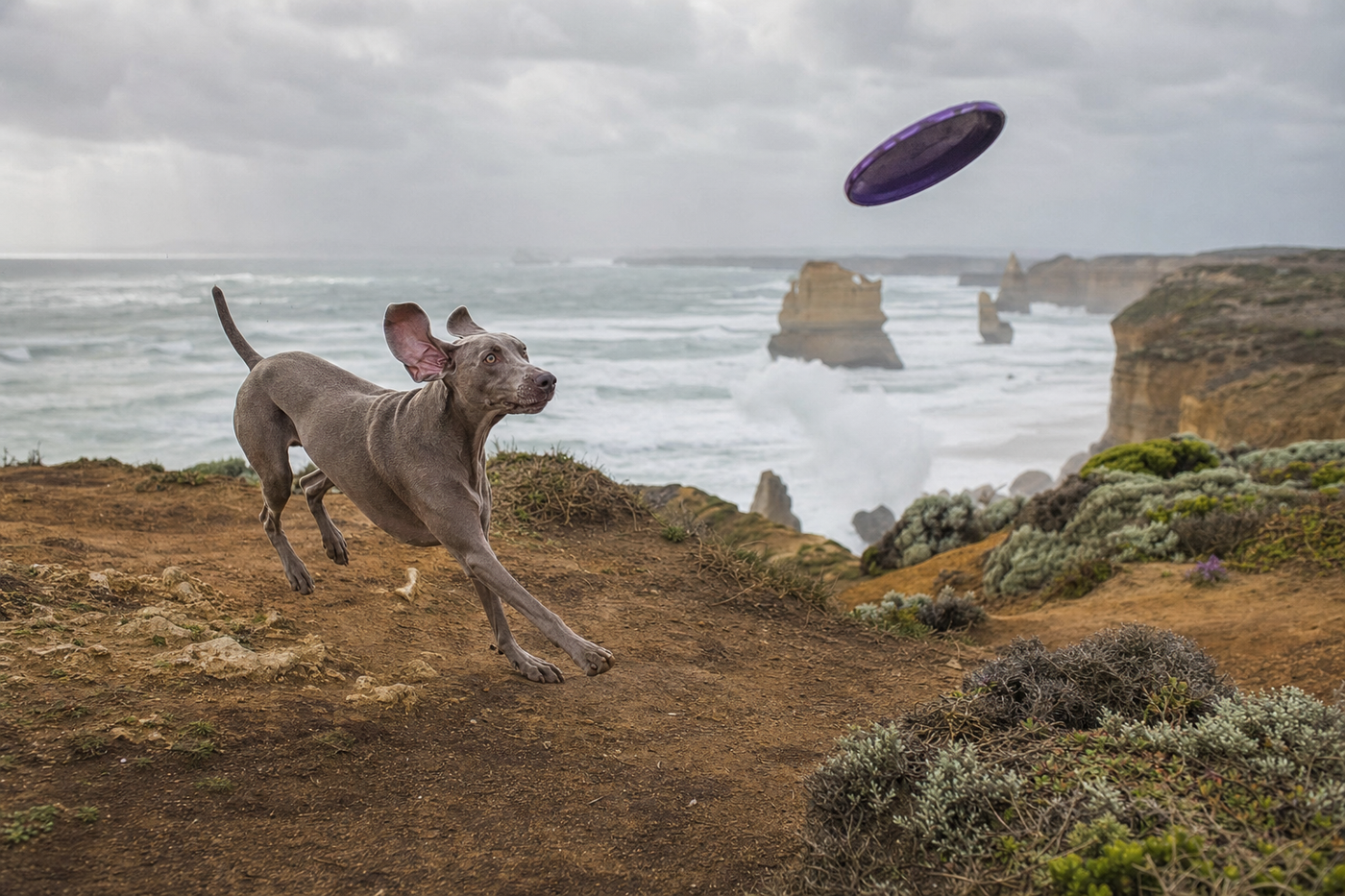
Weimaraners can suffer heatstroke rapidly in enclosed vehicles. Never leave your dog in a car unattended, even briefly on mild days. Keep air conditioning running if you must remain in the vehicle.
Weimaraners are escape artists and can jump standard fences. Always check accommodation fencing height and keep your dog on a lead if the fence is lower than 1.5 metres.
Why Weimaraners Are Challenging Travel Companions
Weimaraners are stunning dogs, but they're built for work and movement. These sleek, muscular athletes need serious exercise, and they don't cope well when confined for long periods. I learned this the hard way when I took my boy Max from Melbourne to the Great Ocean Road thinking he'd just nap in the car. By the third hour he was whining, panting, and generally making everyone miserable.
They're also prone to separation anxiety. Weimaraners bond intensely with their owners and hate being left alone. When I stopped for coffee near Lorne, Max panicked so badly the cafe owner came out to check if he was alright. These dogs need your time and attention, not just a comfortable spot in the back seat.
Their short coat sounds low-maintenance, but they shed constantly and get cold easily. I've had Max shake with cold in the Adelaide Hills in winter, even though other dogs seemed fine. Understanding these traits before you travel saves everyone stress.
Preparing Your Weimaraner for Travel
Start training your Weimaraner for travel at least six weeks before your trip. Get them used to the car with short drives first, not full road trips. I'd take Max just to the local shops and back, slowly building up to 30 minutes, then an hour. Dogs who've never spent time in cars get anxious quickly, and that anxiety compounds over 12-hour drives.
Visit your vet for a pre-travel health check and chat about your route. Ask what to do if your dog gets carsick or has stomach issues while travelling. Some vets recommend smaller meals before travel, while others suggest feeding only at your destination. Your vet knows your dog's individual needs.
Arrange microchipping if you haven't already, and update your details on the national register. Get your dog's vaccination records printed and stored safely. A collar with an ID tag showing your phone number and destination area code is essential. When I travelled from Sydney to Coffs Harbour with Max, I added my temporary accommodation's phone number to his tag because my mobile reception wasn't reliable near our cabin.
What we recommend
Some links below are affiliate links. Pawtrips may earn a commission at no extra cost to you.
PitPat Dog GPS Tracker - No Subscription Needed
A GPS tracker provides peace of mind when travelling through unfamiliar areas. If your Weimaraner escapes during exercise or bolts from accommodation, you'll know exactly where they are. This tracker works across Australia without ongoing subscription fees, making it ideal for holiday travel when your dog is in high-escape-risk situations.
Mastering the Car Journey
Never let your Weimaraner travel loose in the car. Use a properly secured crate or a harness attached to the seatbelt. Loose dogs become projectiles in emergency braking, and distracted driving kills. I invested in a large dog car crate that fits in my station wagon, and it transformed our trips. Max settled immediately because he had a den-like space that felt secure.
Stop every two hours, minimum. Weimaraners have short bladders compared to their long legs, and they need to stretch properly. I route my trips through small towns with parks, not service stations. There's a great dog park in Goulburn, exactly halfway between Sydney and Melbourne, where Max can run around freely for 30 minutes. Plan your stops around these opportunities rather than just grabbing petrol.
Manage temperature ruthlessly. Weimaraners overheat fast and suffer in cold cars too. Keep your air conditioning or heating on, never rely on cracked windows. On hot days in January, I won't travel between 11am and 4pm because the car gets dangerous even with air con if you get stuck in traffic. Drive early morning or late evening instead.
Large dog car crate
A properly secured crate transforms car journeys by giving your Weimaraner a safe, den-like space where they can settle and relax. Unlike harnesses alone, a crate prevents your dog from moving around the car, which reduces anxiety and keeps everyone safer during sudden braking or accidents.
Exercise and Mental Stimulation on the Road
Your Weimaraner needs the same exercise while travelling as at home. That usually means 90 minutes daily, split into morning and evening sessions. This isn't negotiable, and skipping it will turn your holiday into a nightmare. When I spent a week in Brisbane with Max, I'd wake at 6am for a 45-minute run along the South Bank Parklands before the heat kicked in, then a 45-minute evening walk after dinner.
Find dog-friendly beaches, parks, and trails before you leave home. Search for fenced dog parks in towns you're stopping at. Use your phone to check opening hours and whether they require registration. The Dogs Trust website lists thousands of parks across Australia. I planned my Great Ocean Road trip around parks near each accommodation, checking reviews to find quiet times when Max could run without harassing other dogs.
Weimaraners are smart and bored easily. Pack toys, chew items, and puzzle feeders for downtime. Max has a specific rope toy and a Kong that he only gets in the car to create positive associations. Without mental stimulation, he'd destroy furniture or bark at guests. A tired Weimaraner is a calm one, and a calm one makes travel pleasant for everyone around you.
Kurgo Dog Food Travel Bag: Kibble Carrier, 5 Pound
This bag keeps your Weimaraner's food fresh and organised during road trips. It's airtight, prevents spillage in the car, and takes up minimal space. Feeding your dog the same food they eat at home reduces digestive upset during travel, and this carrier makes portion control and storage straightforward.
Finding Dog-Friendly Accommodation
Book pet-friendly accommodation well in advance, especially during school holidays and summer. Some places advertise as dog-friendly but only accept small dogs. Ring ahead and ask explicitly if they accept large dogs over 25kg. I called ahead to a beachside holiday home near Merimbula that said dogs were welcome, only to discover they meant dogs under 10kg. The owner was apologetic but firm, and I ended up staying elsewhere.
Budget extra money for pet fees. Most places charge between 15 and 40 dollars per night for dogs. Some require a damage bond of 50 to 100 dollars. Read reviews from other dog owners before booking. I trust reviews that mention specific dogs, like people saying their Labrador had a great time, because it means the reviewer has similar dogs to mine.
Find places where your Weimaraner can be outside safely. Weimaraners can escape standard fences by jumping, so look for properties with high fencing or ones where you're allowed to keep your dog on a lead in the garden. One cottage I booked near Bright had only a waist-high fence. I had to keep Max on a long line whenever outside, which limited his freedom and frustrated him. Next time I'll choose properties with higher security or those where I can rent the entire property.
Managing Heat, Separation Anxiety, and Health on Holiday
Heat kills Weimaraners quickly. Never leave your dog unattended in a car, even for five minutes at a cafe. Even on cool days, a car becomes an oven in direct sun. I've seen Weimaraners suffer heatstroke on 28-degree days because they were left in a car for just 10 minutes while the owner popped into a shop. If you need to stop and go inside somewhere, either take your dog with you or stay in the car with the air conditioning running.
Separation anxiety worsens in unfamiliar environments. Your Weimaraner may handle being home alone for a few hours but panic in a holiday cabin if you leave for dinner. Consider hiring a pet sitter for your destination, or plan your days around not leaving your dog alone. When I holiday now, I either eat early before the restaurant gets busy or get takeaway to the accommodation. It's not ideal, but it beats the stress of a panicking dog and worrying about complaints from neighbours.
Keep a basic first aid kit: bandages, antiseptic, tweezers for splinters, and any prescribed medications. Know where the nearest emergency vet clinic is before you need it. The Animal Emergency Service in Brisbane and the Animal Referral Hospital in Sydney are excellent but expensive. Most country towns have one vet clinic, sometimes with emergency hours that close at 6pm. Plan your activities accordingly and don't get stranded somewhere remote at dusk with an injured dog.
Dog Separation Anxiety Collar, Four Pack
Weimaraners commonly develop separation anxiety in unfamiliar holiday accommodation. These calming collars can reduce panic and excessive barking when you need to leave your dog briefly. While they're not a replacement for management and training, they provide useful support during stressful travel situations.
Seresto Flea & Tick Collar for Large Dogs Over 8kgs
Travelling through different regions exposes your Weimaraner to new parasites and insects. This collar provides eight months of flea and tick protection without monthly applications, so you don't need to worry about doses or scheduling while travelling. It's especially valuable when you're moving between warm and cool regions where pest seasons differ.
Packing Essentials for a Weimaraner Road Trip
Pack more than you think you'll need. Bring enough food for the entire trip plus extra, because changing diets suddenly can cause digestive upset. Max eats the same kibble he eats at home, and I always bring it rather than buying locally. Bring fresh water from home for the first day to help his stomach adjust, then transition to local water. Use a collapsible bowl so it takes minimal space and collapses into your bag.
Bring vaccination records, microchip details, recent photos of your dog, and your vet's contact information. Include any medications, plus a few days extra in case you get delayed. Bring a lead, collar, harness, and ID tag as backups. I travel with two collars because Max once scratched his so badly I had to replace it mid-trip.
Pack a travel bed so your dog has a familiar sleeping spot. Weimaraners love comfort and familiar scents help them settle in strange places. Bring toys and chews, including high-value items to keep them occupied during downtime. I travel with Max's specific blanket that smells like home. He recognises it and settles faster. Also pack a towel and first aid kit. Weimaraners get muddy fast, and quick access to a towel saves accommodation from getting trashed when your dog shakes off.
Building Confidence for Future Travels
Your first trip won't be perfect, and that's okay. I was stressed on my first road trip with Max, second-guessing every decision. By the fifth trip, I understood his patterns and what he needed. Now I can predict when he'll need a toilet break and plan accordingly. This knowledge only comes from experience.
Start with short trips close to home before attempting longer journeys across state borders. Take a weekend to the coast or countryside, stay one night, then head home. This teaches your dog that travel is temporary and that you always return to your normal routine. Build up to longer trips gradually.
Connect with other Weimaraner owners who travel. Online communities and local dog clubs share real advice about pet-friendly places, which vets are good, and what actually works. I learned about that brilliant Goulburn dog park from another Weimaraner owner in a Facebook group. These communities are goldmines of practical information you won't find in guidebooks.
Plus early access to new guides and partner deals.
No spam. Ever. Just the good stuff for you and your pet.