Whippets can suffer heat stroke in as little as fifteen minutes in a hot car. Never leave them unattended in vehicles, and watch for excessive panting, drooling, or lethargy as warning signs.
Paralysis ticks are fatal to dogs in Australia and are active in warm regions year-round. Check your whippet's entire body daily during travel and seek veterinary help immediately if you find an engorged tick.
Why Whippets Make Tricky Travel Companions
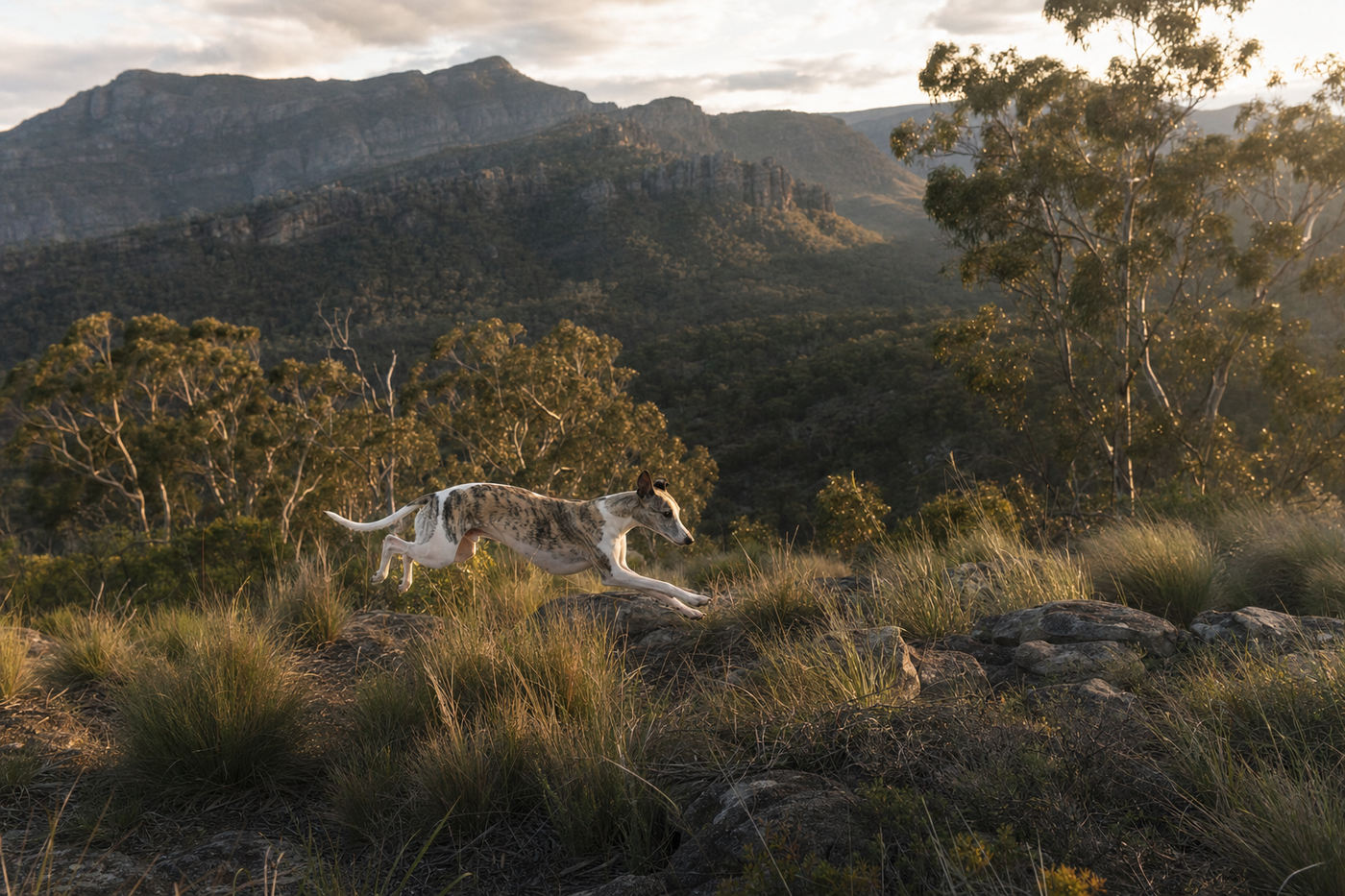
Whippets are energetic, independent sighthounds bred to chase small prey at high speed. They need significant daily exercise and will bolt if they spot a rabbit or cat, even in unfamiliar places. Unlike labs or cavaliers, whippets don't naturally stay close to their owners, so managing them in new environments requires planning and vigilance.
Their short coats offer no protection from Australian heat or cold, and they feel temperature changes intensely. You'll find your whippet seeking shade in the middle of summer and needing a jacket during cooler Victorian mornings. Understanding these traits shapes every decision you make when travelling with your dog across Australia.
Securing Your Whippet in the Car
Travelling by car from Adelaide to Melbourne or Sydney to Brisbane means spending four to twelve hours on the road. Your whippet needs to be secured properly so they don't distract you or get injured in sudden stops. A crash-tested harness that attaches to the seat belt works better than a loose crate for whippets, as they appreciate being able to see out windows.
Before a long drive, give your whippet a decent walk or run so they're tired enough to sleep. Pack a collapsible water bowl and offer water every two to three hours at rest stops. Never assume your dog is fine sitting in a car for eight hours straight, even if they seem calm at first.
What we recommend
Some links below are affiliate links. Pawtrips may earn a commission at no extra cost to you.
PitPat Dog GPS Tracker - No Subscription Needed
Whippets bolt after movement without warning. This GPS tracker lets you locate your dog instantly if they escape, giving you peace of mind during travels across unfamiliar territory. No monthly fees mean it's affordable for the duration of your trip.
Finding Heat-Safe Accommodation
When you book accommodation in Darwin or inland Queensland during summer, confirm the property has air conditioning or strong fans. Whippets cannot regulate their body temperature like dogs with thicker coats, and they'll suffer in a caravan that heats up in the afternoon sun. Many pet-friendly cabins in places like Kingscliff or the Dandenongs now advertise air-conditioned rooms and shaded outdoor areas.
Check whether your accommodation allows you to leave windows cracked open or has a veranda where your whippet can rest during the hottest hours. Some places in regional New South Wales offer doggy daycare or shade structures, which gives you freedom to explore while your dog stays cool. Always plan your activities around the hottest part of the day, roughly 1 PM to 4 PM.
Seresto Flea & Tick Collar for Large Dogs Over 8kgs
Travelling through Australia's warmer regions exposes your whippet to paralysis ticks and fleas. This eight-month collar provides continuous protection without monthly applications, perfect for multi-week road trips where remembering treatments is difficult.
Managing Your Whippet's Chase Instinct
Whippets see movement and their brain switches to chase mode instantly. A rabbit running through a holiday park in the Blue Mountains or a possum in a campground will trigger your dog's prey drive, and they'll be 200 metres away before you can call them back. Many whippets don't come reliably on recall, so you must never trust them off lead in unfenced areas.
Use a long line (six to ten metres) in open spaces where you're camping or visiting quiet beaches. This gives your whippet freedom to move and explore while you retain control. Stick to fenced dog parks and beaches that allow dogs, and avoid areas near water where they might chase waterbirds and get into danger. Talk to locals about whether snakes or other hazards are active in the region you're visiting.
Kurgo Dog Food Travel Bag: Kibble Carrier, 5 Pound
Keep your whippet's kibble fresh and accessible during long drives across Australia. This durable bag prevents spills in caravans or cars and keeps food sealed away from pests at campsites. It's lightweight enough to carry between accommodation and your vehicle.
Exercise Plans That Suit Your Travel Schedule
A whippet needs a genuine run, not just a walk around the block. If you're staying in Canberra for three days, find a dog park where your whippet can sprint for fifteen to twenty minutes. Many Australian towns have enclosed off-lead areas where sighthounds can safely burn energy without chasing wildlife.
If you're camping or staying somewhere without a dog park, plan for a securely fenced area or take your whippet to quieter times at a public park where you can throw a ball. Tired whippets are well-behaved whippets. A dog that hasn't had proper exercise will pace in the accommodation, whine, and create conflict with neighbours. Build exercise into your daily itinerary just as you would plan meals or sightseeing.
Handling Flea, Tick, and Snake Safety
Australia's warmer regions carry paralysis ticks and brown snake season runs from September through March in most states. Before you travel, talk to your vet about whether your whippet needs tick and flea protection. Some collars provide three to four months of coverage, which is useful if you're embarking on a long trip.
Snakes are rarely aggressive but they're attracted to small, fast-moving animals. Keep your whippet away from long grass and leaf litter, especially near water. If you're hiking in areas known for brown snakes, keep your whippet on a short lead and watch for movement in undergrowth. Learn to recognise snake warning signs in the regions you're visiting, and know where the nearest vet clinic is located.
Pet-Friendly Stays Across Australia
Booking accommodation that explicitly welcomes dogs means you won't face last-minute cancellations or surprise pet fees. Many Australian holiday parks and boutique properties now offer dog-friendly rooms with secure yards, air conditioning, and nearby walking trails.
Food, Water, and Digestive Health on the Road
Changing your whippet's food or water source can trigger diarrhoea, which is unpleasant in a caravan or holiday cabin. Bring enough of your whippet's regular kibble from home in a portable container. If you're travelling for more than two weeks, ask your vet about ordering supplies to your destination or find the same brand locally.
Whippets can be fussy eaters at the best of times, and travel stress makes them worse. Stick to their regular feeding times and avoid giving them new treats or human food. Pack a collapsible water bowl so you can offer fresh water regularly, especially on hot days. If your whippet stops eating or develops loose stools, contact a local vet rather than hoping it passes.
Building Your Pre-Travel Vet Checklist
Visit your vet four to six weeks before travelling across Australia. Get your whippet a health certificate, update their microchip registration with current contact details, and ensure their vaccinations are current. If your whippet is anxious in cars or new environments, discuss medication options with your vet.
Request a written summary of your whippet's medical history, current medications, and any dietary requirements. Find vet clinics along your planned route and save their numbers in your phone. If you're travelling to remote areas of Western Australia or the Northern Territory, check whether vets are available or if you need to carry emergency supplies. Travel insurance for pets can cover unexpected vet bills, which is worthwhile if you're away for extended periods.
Plus early access to new guides and partner deals.
No spam. Ever. Just the good stuff for you and your pet.